
Fresh croissants feel like a bakery luxury, until you do the maths. A single croissant can cost more than a whole batch at home. This easy, all-butter method keeps the flavour and the flaky layers, but skips the classic “butter block” lamination that scares off first-timers.
The headline is simple: around £2.14 total for roughly 12 large croissants, which works out at about 17p each (based on one real-world shop run). It’s a budget recipe that asks for patience more than skill, with a few rests and a couple of rises doing most of the heavy lifting.
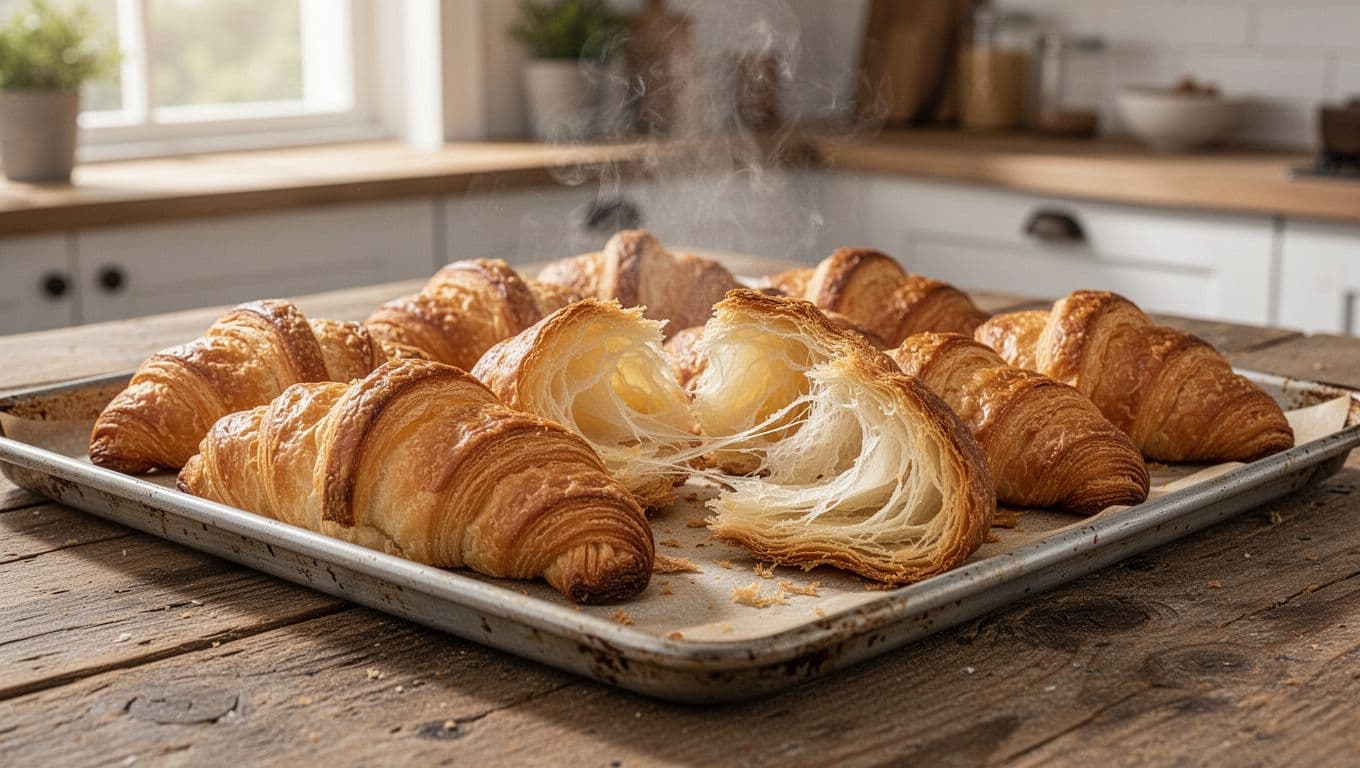 Golden homemade croissants with visible layers, baked until crisp and glossy (created with AI).
How these croissants hit the 17p each mark (and what you really need)
This recipe stays cheap because it uses basic supermarket ingredients, and it doesn’t require fancy tools. The key cost is butter, and even that stays reasonable when you’re making a dozen pastries at once.
Here’s the core shopping list, with the same quantities used in the original cost breakdown:
- 240 ml whole milk
- 1 teaspoon sugar
- Pinch of salt
- 2 eggs (one for the dough, one for egg wash)
- 420 g strong bread flour
- 200 g butter
- 1 packet dried yeast (often about 8 g)
On that sample shop, the main ingredients came to about £2.14 total, producing around 12 large croissants, or roughly 17p each. Your numbers will move around with location, brand, and size of packs. Also, yeast can be pennies per batch, but it’s not always included in a quick tally if you already have it in the cupboard, so treat the total as a realistic “around this” figure, not a promise.
Want a sanity check on how other home bakers keep croissants affordable? This piece on easy croissants on a budget is a useful comparison for ingredients and approach, even if the steps differ.
A small waste-cutting habit helps, too. Strong bread flour and butter both store well. Keep flour sealed and dry, and freeze spare butter if you catch a good deal. Milk can be bought in larger bottles if you’ll use the rest for porridge, tea, or pancakes.
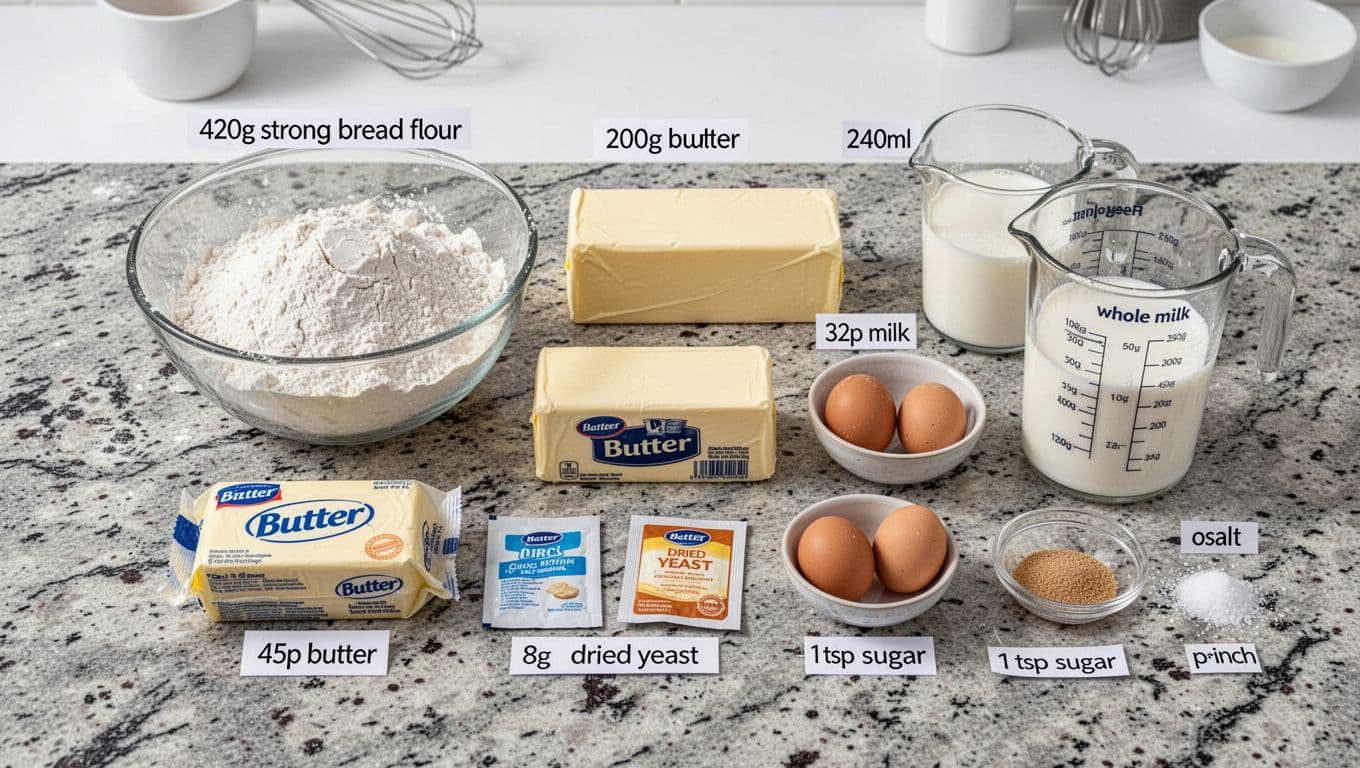 Measured ingredients laid out in one place, which makes budgeting and prep much easier (created with AI).
Shopping tips that keep it cheap without ruining the bake
Butter and flour do most of the work here, so don’t overthink the rest.
Store-brand butter is fine. You’re brushing it between layers, so the big win is “real butter,” not a premium label. Save the pricey French-style butter for another day.
Pick strong bread flour (not plain). The higher protein helps the dough hold its shape as it rises, so you get croissants that feel light inside instead of cakey.
Use dried yeast packets or a jar. Packets are simple and consistent. A jar is usually cheaper per bake if you make bread often.
Scale the batch if you want. You can halve everything for 6 croissants, but your cost per piece may rise a bit if you’re buying full-size packs anyway. If you’re learning, a full batch is great practice, and leftovers freeze well.
The easy method that still gives flaky layers
Classic croissant lamination uses a cold sheet of butter folded into dough again and again. It works, but it can be fussy. This method gets you a similar “layered” effect in a more forgiving way.
Instead of wrestling a butter block, you:
- Make a simple yeasted dough.
- Divide it into 8 pieces.
- Roll each piece into a small round (about 7 inches, roughly 12 cm).
- Brush softened butter between the rounds and stack them.
- Chill the stack so the butter firms up.
- Roll the stack into one large circle (about 14 to 15 inches).
- Cut triangles, roll them up, proof, egg wash, bake.
Two details matter more than anything else: resting and temperature. Chilling firms the butter so it behaves like a layer instead of soaking into the dough. Resting also relaxes the dough, so it rolls without springing back.
If you like seeing how different shortcut methods compare, this “buttery layers without the fuss” approach is another good reference point for what “easy croissant” can mean in practice.
Quick timeline so you can plan your morning
This is a “simple steps, waiting in between” bake. Times change with room temperature, so use them as a guide.
- Warm the milk until it’s lukewarm, not hot.
- Stir in dried yeast and sugar, then wait about 10 minutes for a frothy top (a sign the yeast is awake).
- Mix in flour, salt, and one egg, then bring it into a dough.
- Knead a few minutes until it looks smoother and less sticky.
- First rise: cover and leave in a warm spot until roughly doubled, often about 1 hour (an oven with just the light on works well).
- Soften the butter just enough to spread.
- Knock back the dough, then divide into 8 equal-ish pieces.
- Roll each piece into a round, about 7 inches across.
- Brush butter over a round, stack another round on top, butter again, repeat until you’ve got a buttery stack.
- Wrap and chill at least 15 to 20 minutes (overnight is fine if life gets in the way).
- Roll the chilled stack into a 14 to 15 inch circle.
- Cut into 12 triangles, shape into croissants.
- Final proof: about 1 hour, until puffy and close to doubled.
- Egg wash with the second egg.
- Bake hot first: 200 C for 5 to 6 minutes.
- Turn the oven down: 170 to 180 C for 8 to 11 minutes, watching for deep golden colour.
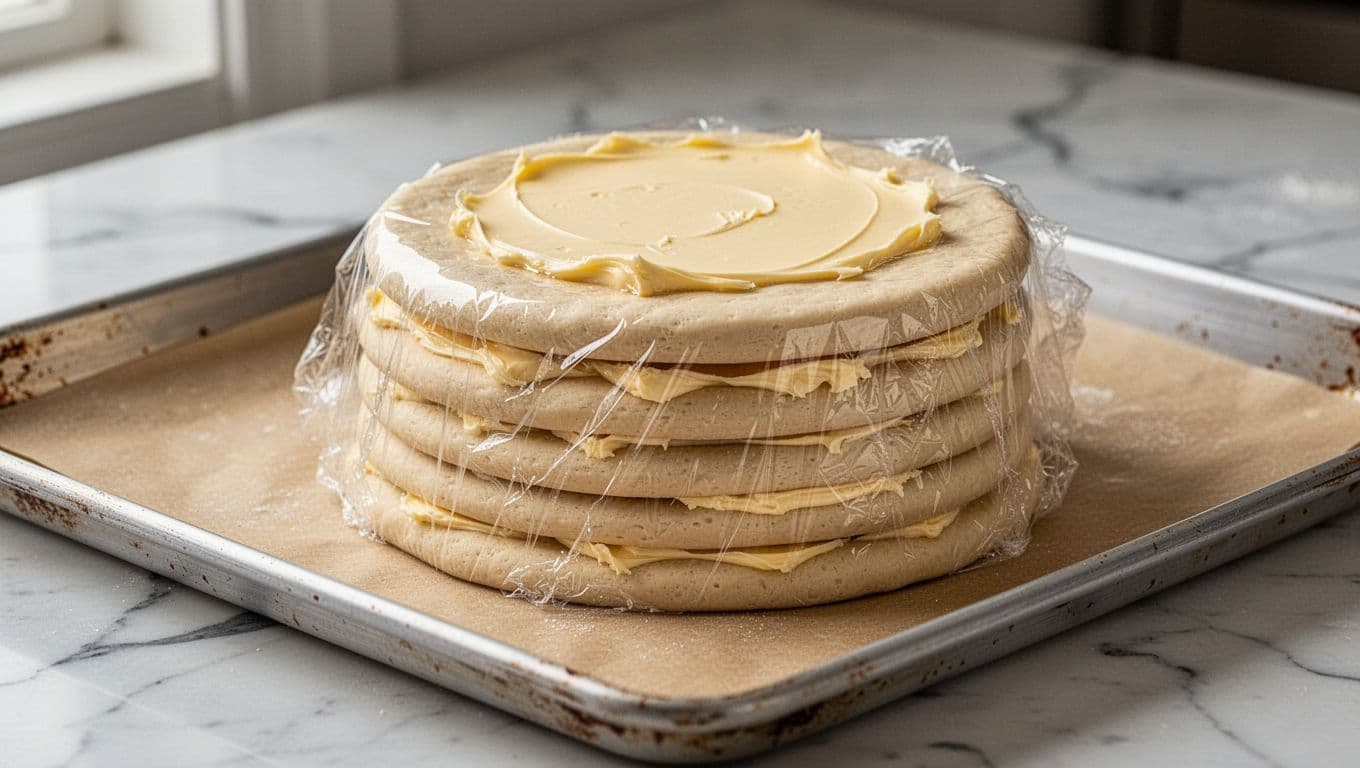 Stacked, butter-brushed dough rounds ready for the fridge, the “easy lamination” that creates layers (created with AI).
Shape, proof, and bake without stress (what to look for)
When your big circle is rolled out, aim for triangles that are roughly even. Perfect geometry isn’t required. Cut the circle into quarters, then keep slicing until you land at 12 triangles.
A small shaping trick helps: add a short slit at the wide end of each triangle (optional), then gently stretch the dough a touch before rolling. Roll from wide end to tip, and place them seam-side down so they don’t unroll during proofing.
Proofing is where many first-timers panic, because it’s hard to “measure.” Skip the stopwatch and look at the dough. You want croissants that look puffy, softer, and bigger, not tight and dense. They often get close to double, and they’ll wobble slightly if you nudge the tray.
For shine and colour, brush with beaten egg right before baking. Then bake hot at first to push the rise, and lower the temperature to finish them through without burning the outside.
For another beginner-friendly take on “easy, flaky, homemade,” this write-up on making croissants for less is helpful for expectations, especially around proofing and bake colour.
 Unbaked croissants after egg wash, spaced out so they can rise and brown evenly.
Photo by Felicity Tai
Common problems and easy fixes for first time croissant makers
Your first batch doesn’t need to look like a patisserie window to taste amazing. Most issues come from moisture, warmth, or not giving the dough enough time.
Dough feels too sticky: Add a small sprinkle of flour while kneading, then stop. Too much flour makes the dough tight and heavy. Sticky is annoying, but it often improves after the first rise.
Dough feels dry or won’t come together: Add a tiny splash of warm water (a teaspoon at a time). Dry dough can happen if your flour absorbs more liquid than expected.
Butter starts melting and leaking: Chill longer. If your kitchen is warm, the butter layer softens fast while rolling. Cold dough is your friend here. Also, soften butter until spreadable, but don’t take it to “fully liquid.”
Layers seem to disappear: This is almost always butter getting absorbed. Keep the butter soft but not runny, and give the stack time in the fridge before rolling the large circle.
Croissants don’t rise much: Yeast may not have activated, or the proofing spot is too cool. Lukewarm milk helps yeast wake up, and a gentle warm place (like an oven with only the light on) can speed things up.
Croissants spread wide instead of puffing up: They may be over-proofed, too warm, or too close together on the tray. Space them out, and aim for “puffy” rather than “fragile and collapsing.”
Pale tops: Use egg wash and bake long enough. If your oven runs cool, you may need a minute or two extra at the lower temperature.
Burnt bottoms: Move the tray up a rack, or double up baking trays to buffer direct heat from the bottom element.
If you want another quick read on keeping croissants light and airy without complicated steps, this seven-ingredient shortcut discussion reinforces the same theme: simple method, careful heat, and patience.
Why your butter layer matters (soft, not fully melted)
The butter should feel like spreadable paste, not a puddle. A gentle warm-up helps if it’s fridge-hard, but stop early and work it with a spoon or spatula until it smooths out.
A quick test: when you brush it on, it should coat the dough and stay put. If it runs like oil or turns the dough shiny-wet, it’s too melted. That’s when the butter soaks in and you lose the distinct layers you’re trying to create with the stacked rounds.
Conclusion
If you’ve been putting off croissants because they “sound hard,” this method is a great first win. You get about a dozen all-butter croissants for around 17p each, using normal ingredients and a process that’s forgiving.
Try it once as written, then adjust based on what you notice. A longer chill can sharpen the layers, and smaller triangles make excellent mini croissants for snacks. When you bake your next batch, aim for one thing: puffy dough going into a hot oven, and let the smell do the rest.


0 Comments