
Nothing makes a kitchen feel cozier than the smell of ginger, cinnamon, and molasses drifting out of the oven. Gingerbread men do that fast, and they’re easier than they look, even if you don’t bake often.
This guide keeps it simple, with affordable pantry basics, two foolproof ways to mix the dough (fast or chilled), and decorating that won’t trash your counters. It’s also a budget recipe in the practical sense, one batch usually costs less than buying decorated cookies, and you can make them soft and chewy or crisp and snappy, depending on how you bake them.
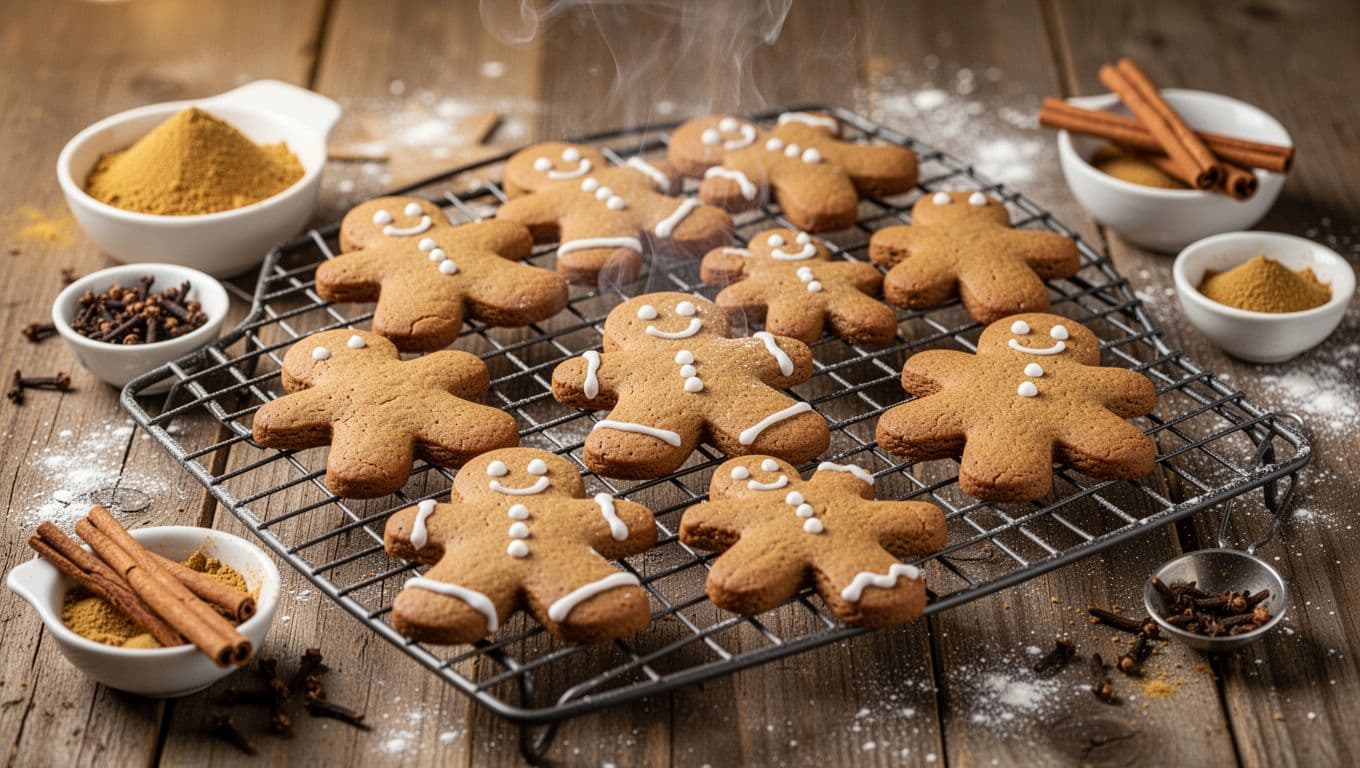 Homemade gingerbread men cooling before decorating, with classic warm spices nearby (created with AI).
What you need to make gingerbread men (and how to keep it affordable)
Gingerbread looks fancy, but the ingredient list is mostly pantry staples. If you’ve baked cookies before, you probably have half of this already.
Essential ingredients (pantry-friendly)
You’ll need:
- All-purpose flour
- Butter (salted or unsalted both work)
- Brown sugar (light or dark)
- Molasses
- 1 egg
- Baking soda
- Salt
- Ground ginger
- Ground cinnamon
- Optional: ground cloves, nutmeg
- Optional: vanilla extract
Money-saving swaps that don’t hurt results: If you don’t want to buy three new spice jars for one batch, choose ginger and cinnamon, then skip cloves and nutmeg. The cookies will still taste like gingerbread. If you bake often, buying spices in small bags or store-brand jars can cut costs without changing the flavor in a noticeable way.
Molasses can be light or dark. Dark gives a deeper taste and darker color. Light is a bit milder. Either works, so use what’s easiest to find. If you’re comparing recipes for softer cookies, a quick look at a dedicated soft-cookie version like soft and chewy gingerbread men cookies can help you see the typical ingredient ratios.
Quick equipment checklist
Keep it basic:
- Large mixing bowl
- Mixer or sturdy spoon
- Measuring cups and spoons
- Rolling pin
- Parchment paper (or a lightly greased baking sheet)
- Gingerbread man cookie cutter
- Baking sheet
- Cooling rack (helpful, not required)
If you don’t have a rolling pin, a clean bottle works in a pinch. If you don’t have parchment, just watch browning closely and remove cookies as soon as the edges set.
Molasses, spices, and texture, what each one does
Molasses is the anchor. It gives gingerbread its deep flavor, darker color, and that warm, almost caramel-like smell while baking. Brown sugar adds moisture and helps cookies stay tender in the center. Butter brings richness and also affects spread, more butter usually means a softer bite.
Baking soda helps the dough puff a little and encourages browning, which is why gingerbread smells so good near the end. The spices do the obvious job, but here’s the nice part: more ginger boosts flavor without adding much cost, since you’re adding teaspoons, not cups. If your cookies taste “sweet but bland,” a small extra pinch of ginger often fixes it.
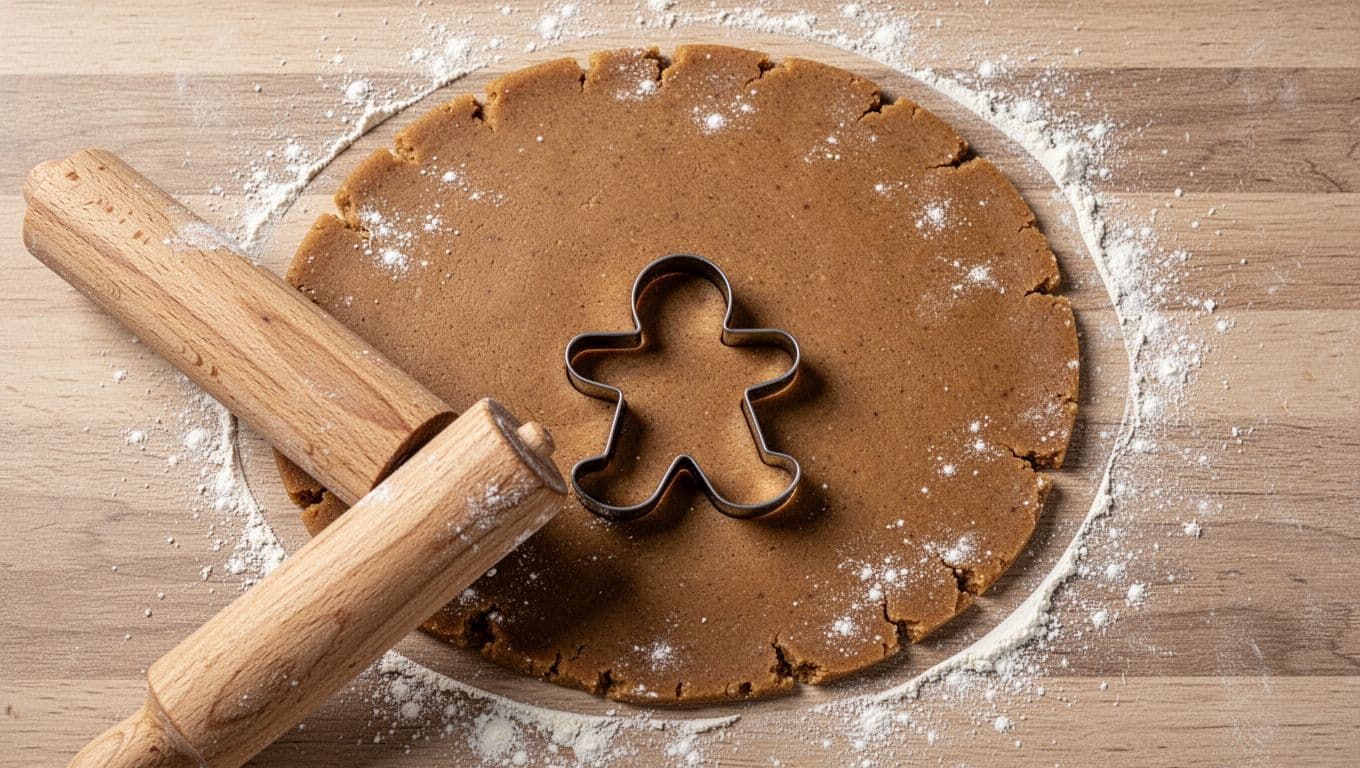 Rolling, cutting, and keeping the counter lightly floured makes clean shapes (created with AI).
Step by step: Mix, roll, cut, bake, and get the texture you want
Think of gingerbread dough like playdough that’s just a little opinionated. Too warm and it sticks. Too cold and it cracks. You’re aiming for cool, pliable, and only lightly floured.
Here’s the core flow, no matter which method you choose:
- Mix wet ingredients and sugar until smooth.
- Whisk dry ingredients in a separate bowl.
- Combine into a soft dough.
- Roll, cut, and move shapes to a lined baking sheet.
- Bake at 350°F until edges set.
- Cool fully before icing.
Texture control comes down to thickness and bake time. For soft and chewy cookies, roll to about 1/4-inch thick and bake on the lower end of the time range. For crisp cookies, roll closer to 1/8-inch to 3/16-inch and bake a bit longer.
Two quick checkpoints save beginners a lot of frustration. If the dough feels sticky, dust the counter and rolling pin with a little flour, and rotate the dough as you roll. If the dough cracks while rolling, let it sit at room temp for 5 to 10 minutes, then try again. Cold dough behaves better, but rock-hard dough fights back.
No chill fast version for busy days
This method can be done in about 30 minutes, and it’s great when you want cookies now, not later.
Warm the molasses and sugars briefly (just until loose and stir-friendly), then stir in the butter until it melts in. Let it cool for a few minutes so it won’t scramble the egg. Add the egg, then mix in the whisked dry ingredients until a dough forms.
Roll immediately on a floured surface, cut shapes, and bake at 350°F for about 11 minutes for a firmer cookie that still has some chew. Warming helps because it dissolves the sugar faster, so the dough comes together quickly without long mixing.
If you want a comparison point for soft results, see how a similar approach is described in soft and chewy gingerbread men cookies, then tweak bake time to match your preferred bite.
Chill dough version for sharper shapes and less spreading
If you care about crisp edges, clean arms, and cookies that look like the cutter shape, chilling is your friend.
Cream softened butter and brown sugar until smooth. Beat in molasses, egg, and vanilla if using. Whisk dry ingredients in another bowl, then mix them in until the dough looks uniform.
Chill the dough at least 1 hour (overnight is fine). Roll, cut, and bake at 350°F for 8 to 12 minutes. Pull them closer to 8 to 9 minutes for softer centers, or go longer for a sturdier snap.
If the dough sticks to the cutter, dip the cutter edge in flour every few cuts. It’s a small step that keeps faces and buttons from tearing.
Decorating gingerbread men without stress (simple icing, kid-friendly ideas, and storage)
Decorating shouldn’t feel like a school project. Keep it simple, keep it edible, and accept the charming weirdness of a lopsided smile. If kids are helping, set out only two or three toppings at a time so the table doesn’t turn into a sprinkle blizzard.
A basic rule: let cookies cool at least 20 to 30 minutes before icing. Warm cookies melt icing, and then everything slides off like it’s on a tiny sugary sled.
 Photo by Thuanny Gantuss
Low-cost decorating ideas that still look festive: sprinkles, raisins, mini chocolate chips, crushed candy canes, or even tiny dots of peanut butter as “glue” for eyes if you don’t want to make icing.
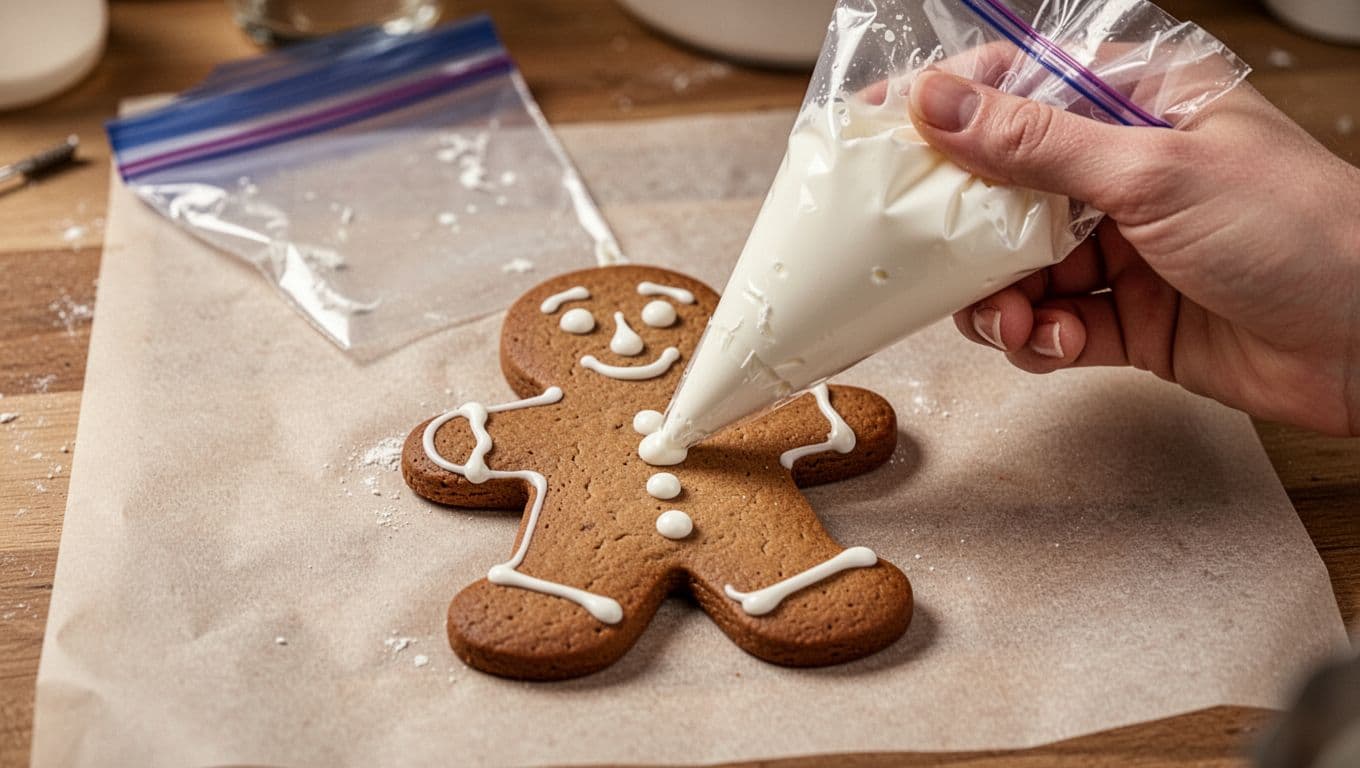 Using a zip-top bag as a simple piping bag keeps decorating neat and fast (created with AI).
Easy icing in 2 minutes (and how to fix it if it is too runny or thick)
For quick icing, stir powdered sugar with a small splash of water or lemon juice until it turns glossy and thick. Start with less liquid than you think you need, because it’s easy to thin, and annoying to thicken.
- If it’s too thick, add liquid a few drops at a time.
- If it’s too runny, add more powdered sugar in small spoonfuls.
For simple designs, outline first (a thicker icing), then add a few drops more liquid to make a smoother icing for filling. No piping tips needed. Spoon it into a zip-top bag, snip the tiniest corner, and you’ve got control without buying anything extra.
If you want a more traditional set-style icing for detailed lines, this gingerbread men cookies guide includes common decorating approaches you can borrow, even if you keep yours minimal.
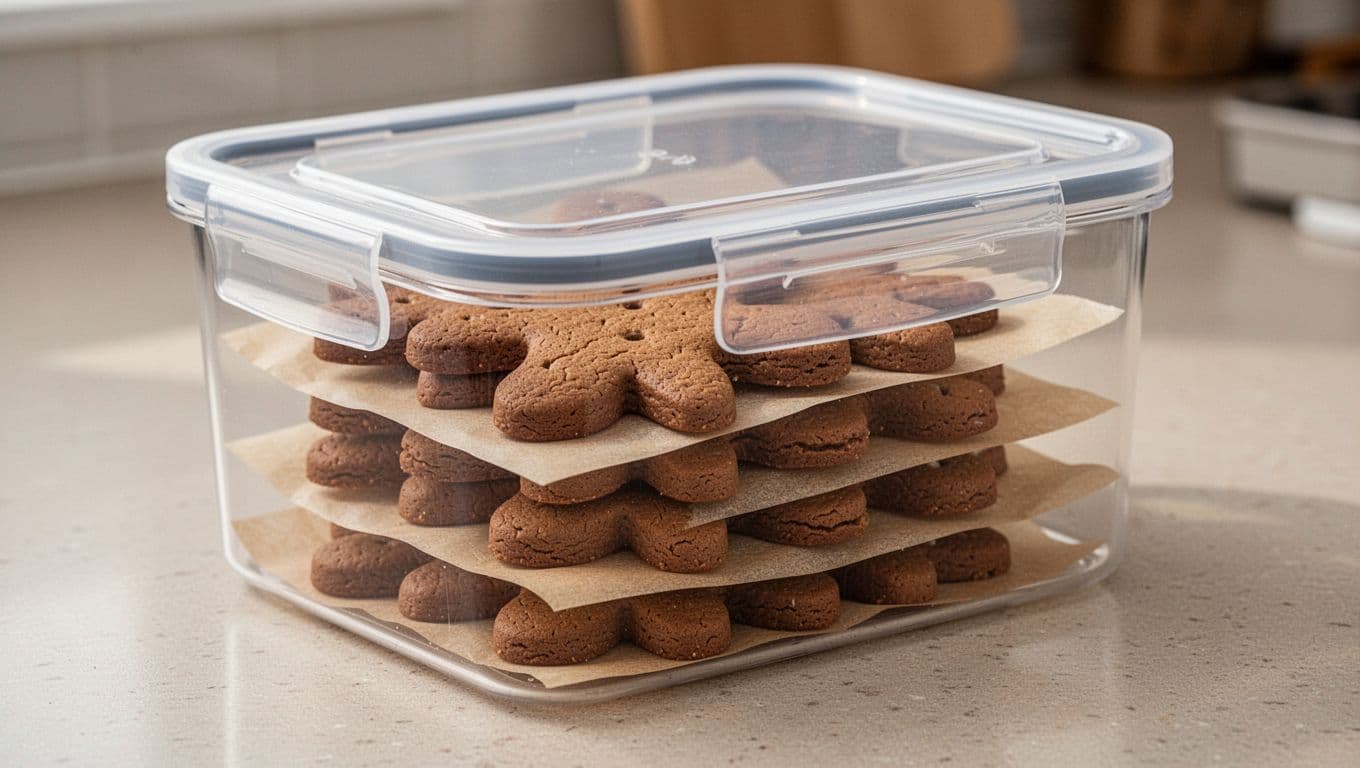 Layering cookies with parchment helps prevent sticking and keeps edges intact (created with AI).
Make them ahead, freeze them, and keep them tasting fresh
Once cookies are fully cool, store them in an airtight container with parchment between layers. At room temp, they’ll stay enjoyable for about 3 to 5 days, depending on how soft you baked them. Crisp cookies soften over time, so keep them tightly sealed.
Freezing works well for both dough and baked cookies:
- Freeze baked cookies: Cool completely, then seal in a freezer bag. Freeze up to a month. Thaw uncovered for 15 to 30 minutes so condensation doesn’t make them damp.
- Freeze dough: Wrap well, then thaw in the fridge overnight. Let it sit a few minutes at room temp before rolling.
If you’re planning a baking day, freezing dough ahead is like future-you leaving a gift on the counter.
Conclusion
Making your own gingerbread men is mostly about a few smart choices: keep ingredients simple, pick the fast dough or the chill dough, and bake to the texture you like. Decorate with easy icing, use a zip-top bag, and store cookies well so they stay tasty for days.
Try a small batch first, then adjust spices and bake time next round. Once you’ve got your favorite softness and your favorite smiley faces, gingerbread stops being a holiday project and starts being a repeatable comfort bake.


0 Comments