

Want a Caramel Cake Recipe that tastes rich and grown-up, but doesn’t require fancy tools or candy thermometers? This one keeps it simple: you’ll make a thick salted caramel sauce in one saucepan, bake two easy cake layers, then sandwich and drizzle everything together.
Salted caramel works for the same reason a tiny pinch of salt makes chocolate taste more “chocolatey”. The salt doesn’t make the cake salty, it turns the sweetness up like a volume knob. You end up with a deeper caramel flavor and a cake that doesn’t taste flat.
Plan on this flow: cook the caramel sauce first, let it cool while the cake bakes, then assemble once the layers are completely cool. You’ll only need two 8-inch pans and one saucepan, and you’ll get a big cake that’s great for birthdays, potlucks, or a “just because it’s Tuesday” dessert.
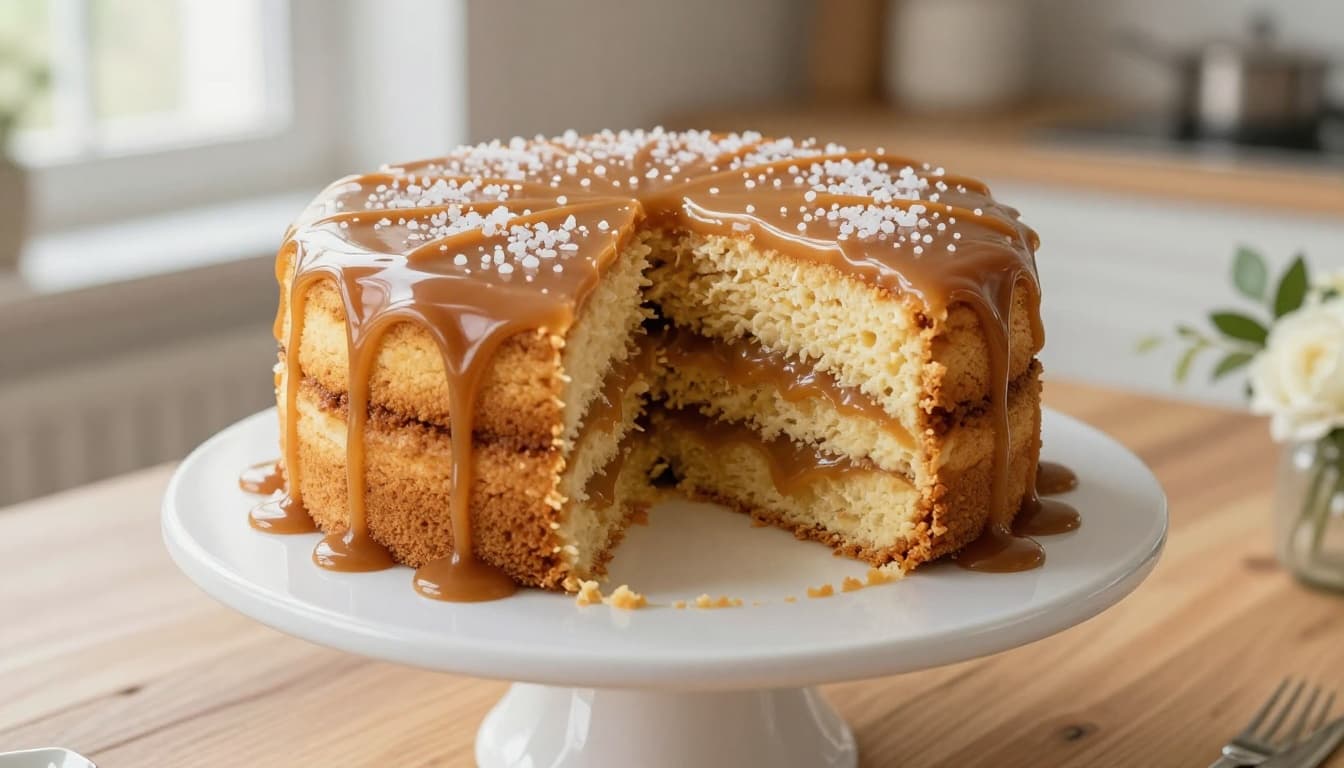 Finished two-layer salted caramel cake with a caramel drip and a slice removed (created with AI). Alt-text: Simple salted caramel caramel cake recipe, two layer cake with caramel drizzle and flaky sea salt.
What you need for this caramel cake recipe (and why each item matters)
This is a straightforward shopping list, but every ingredient has a job. If you’ve ever baked a cake that tasted good but felt a bit dry or tight, these small choices are what fix that.
Ingredients for the cake layers
- Plain (all-purpose) flour (250 g): The structure of the cake.
- Cornstarch (30 g): Softens the crumb and keeps the layers tender, similar to “cake flour” behavior.
- Baking powder (2 1/2 tsp): Gives the cake lift without needing extra steps.
- Salt (pinch): Makes the vanilla and caramel notes pop.
- Butter (170 g, softened): Flavor and a plush texture.
- Vegetable oil (55 ml): Helps the cake stay moist even on day two.
- Granulated sugar (200 g): Sweetness and a light, clean crumb.
- Brown sugar (100 g): Adds deeper, toasted notes that match caramel.
- Eggs (3): Structure plus richness.
- Vanilla extract (1 tsp): Rounds out the caramel flavor.
- Milk (120 ml): Keeps the sponge soft and sliceable.
Substitutes that work:
- Whole milk vs buttermilk: Whole milk is the easy default. Buttermilk also works and adds a slight tang.
- Salted vs unsalted butter: Either is fine. If you use salted butter, keep the added salt in the cake to a very small pinch.
Ingredients for the salted caramel sauce
This method uses condensed milk, which makes the sauce forgiving and smooth.
- Butter (100 g)
- Granulated sugar (180 g)
- Sweetened condensed milk (300 ml): Helps prevent a harsh, burnt sugar taste and builds a creamy caramel.
- Double cream or heavy cream (50 ml): Added near the end for richness.
- Vanilla extract (1 tsp)
- Salt (good pinch, plus extra flaky salt for the top)
If you’re curious about other beginner-friendly caramel approaches, this Salted Caramel Sauce guide from Food & Wine is a helpful reference for technique and serving ideas.
Equipment you’ll use (no specialty gear)
- 2 x 8-inch cake pans
- Saucepan (deeper is safer for hot caramel)
- Mixing bowl, whisk or hand mixer
- Spatula
- Parchment paper (recommended for easy release)
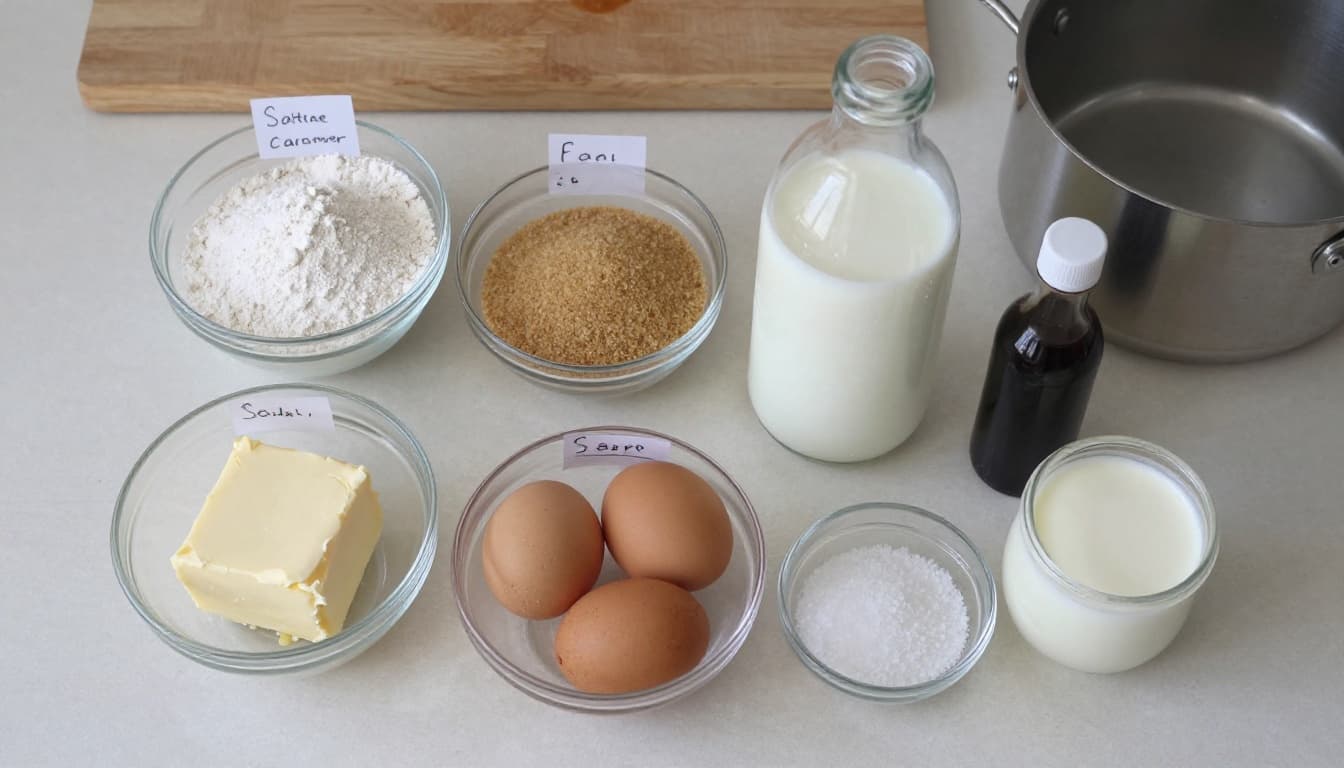 Ingredients measured and ready to go, so the recipe stays calm and simple (created with AI). Alt-text: Ingredients for a simple salted caramel cake recipe, flour, sugar, butter, eggs, cream, condensed milk, salt.
Ingredient shortcuts that still taste homemade
Sometimes you need cake, not a weekend project. A few shortcuts can still give you that homemade feel.
Store-bought caramel sauce can stand in for homemade if you warm it slightly and finish it with a pinch of salt. You won’t get the same depth, but you’ll still get a tasty salted caramel vibe.
Boxed cake mix is also a fair option when time is tight. Bake the layers as directed, then use your homemade caramel as the filling and topping. If you want an example of a semi-homemade direction, this cake mix caramel cake idea shows how people keep the process easy while still serving something generous.
One smart move: make one batch of caramel and use it both between the layers and on top. If you plan to mix caramel into frosting, let it cool first so it doesn’t melt the buttercream and turn it soupy.
Make the salted caramel sauce first, so it is ready when the cake cools
Caramel can feel intimidating because sugar can burn fast. This method is calmer: butter, sugar, and condensed milk simmer gently and thicken over time. You don’t need to stand there stirring nonstop. You just keep the heat low, stir now and then, and watch the texture.
Step-by-step: easy condensed milk caramel sauce
- Put 100 g butter, 180 g granulated sugar, and 300 ml sweetened condensed milk in a saucepan.
- Warm over medium heat, stirring until everything melts together and looks smooth.
- Turn the heat down so it’s barely simmering. You want gentle bubbles around the edges, not a rolling boil.
- Let it cook 35 to 60 minutes, stirring occasionally and scraping the sides. It should darken to a deeper tan and look glossy.
- Take it off the heat, then stir in 50 ml double cream (or heavy cream) and 1 tsp vanilla.
- Add a good pinch of salt, taste carefully once it cools slightly, then adjust.
Safety note: hot caramel is like napalm. Use a deeper pan, don’t touch it, and keep kids away from the stove while it simmers.
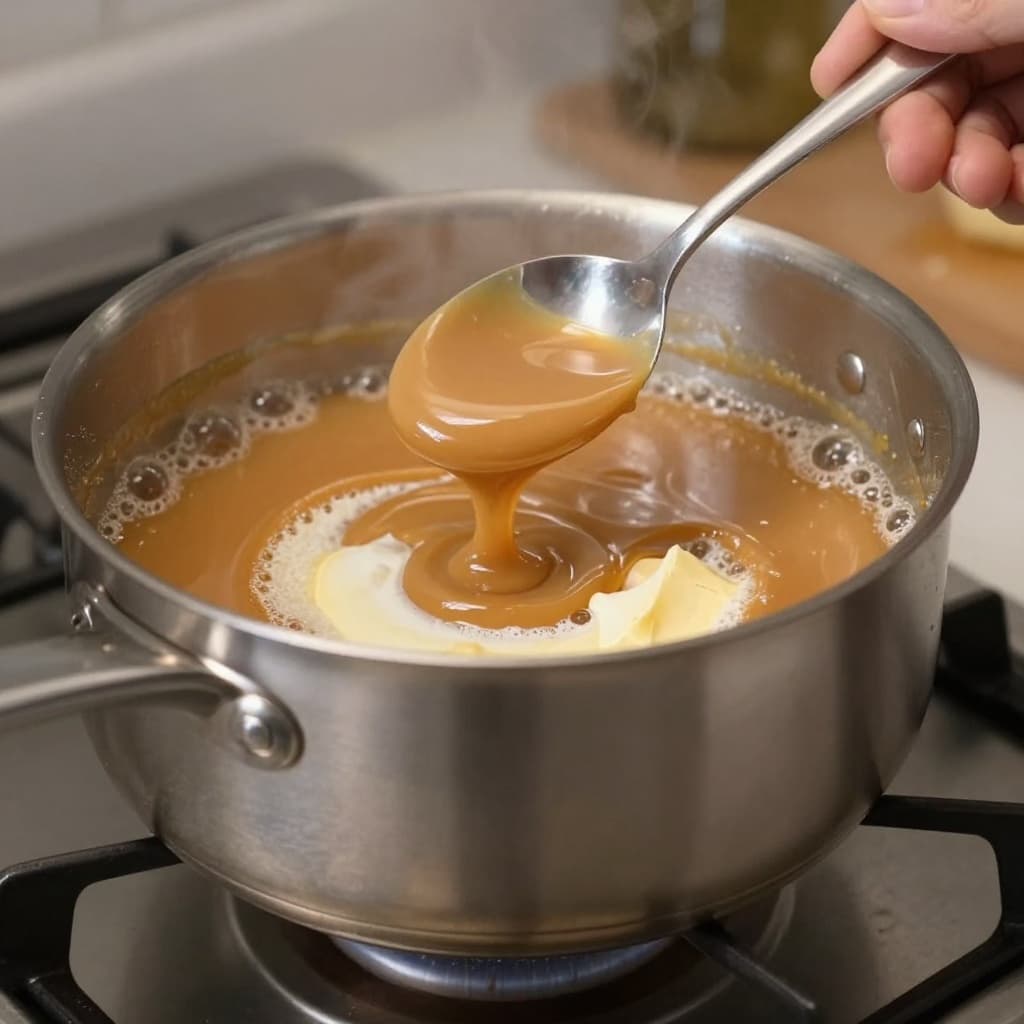 Salted caramel sauce thickening on the stove, glossy and spoon-coating (created with AI). Alt-text: Homemade salted caramel sauce for caramel cake recipe, thick glossy caramel in saucepan.
Common fixes if it misbehaves:
- Too thick once cool: Warm it for 10 to 20 seconds at a time (stovetop or microwave), then stir until spreadable.
- Too thin: Simmer longer on low heat. It thickens more as it cools, so don’t panic too early.
- Grainy texture: This can happen if sugar crystals form on the sides of the pan or if the mixture gets overworked. This guide to fixing grainy caramel sauce explains practical ways to smooth it back out.
How to know your caramel is done (no thermometer needed)
Look for simple, visual signs instead of chasing a number.
When it’s ready, the caramel will coat a spoon and leave a trail that closes slowly when you drag the spoon through the pan. The bubbles will look thicker and slower, mostly around the edges. Color matters too: it should deepen from pale beige to a richer tan.
Pour it into a heat-safe bowl to cool. It will thicken as it sits. Once cool, cover and refrigerate. To use later, warm gently until it’s spoonable again.
If you want to compare textures and color stages, this homemade salted caramel reference from Sally’s Baking has clear visuals.
Bake the cake layers, then assemble with caramel for a clean, bakery look
This cake bakes at a lower temperature than many sponge cakes, which helps it stay soft and even. Think of the batter like a comfy sweater: you want it mixed, but not stretched and tugged forever. Overmixing makes cake tough.
Step-by-step cake batter and bake
- Heat oven to 160°C (320°F). Grease two 8-inch pans and line the bottoms with parchment.
- In a bowl, whisk 250 g flour, 30 g cornstarch, 2 1/2 tsp baking powder, and a pinch of salt.
- In a second bowl, cream 170 g softened butter with 200 g granulated sugar and 100 g brown sugar until lighter and fluffy.
- Mix in 55 ml vegetable oil.
- Add 3 eggs, one at a time, mixing between each. Stir in 1 tsp vanilla.
- Add the dry mix and 120 ml milk in turns (dry, milk, dry, milk), mixing just until the batter comes together.
- Divide batter between pans and bake 20 to 25 minutes, or until a toothpick comes out clean.
- Cool in pans for 10 minutes, then turn out onto a rack to cool completely.
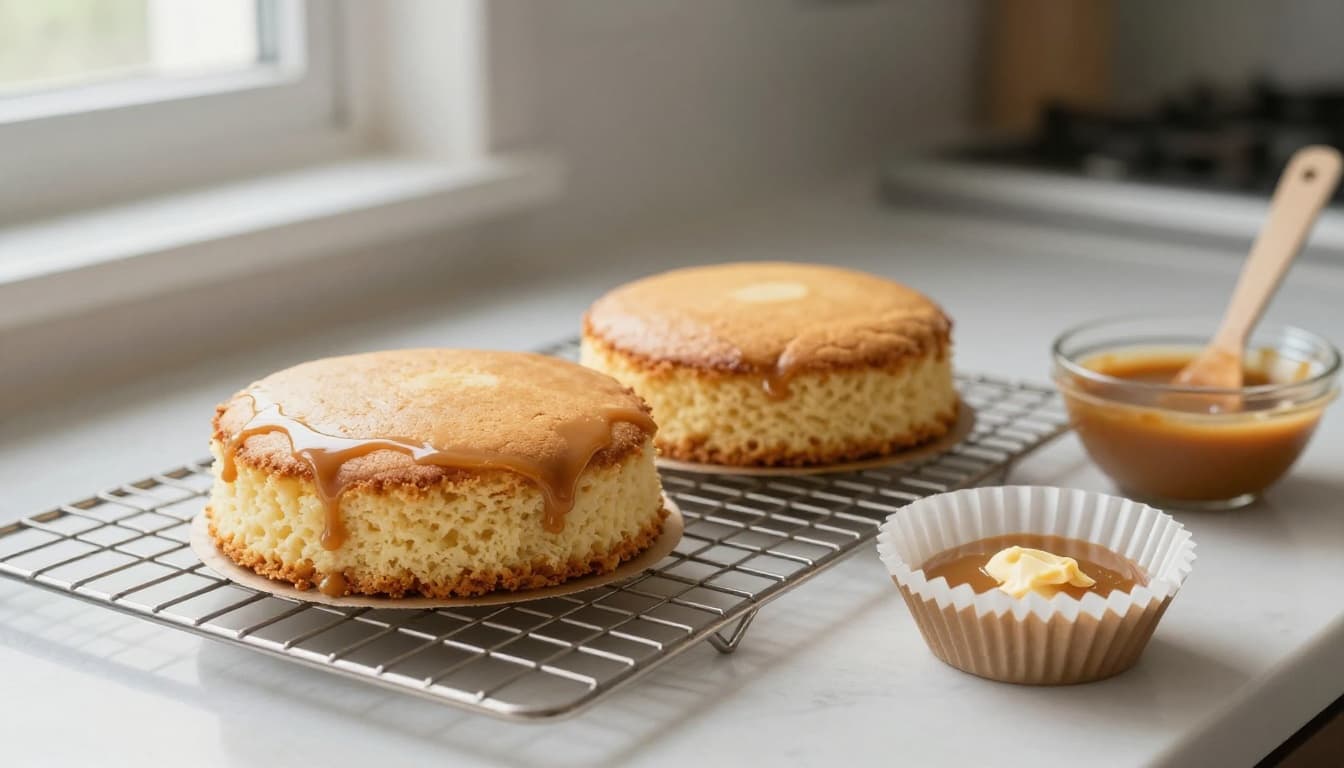 Cake layers cooling fully before stacking, with caramel ready for filling (created with AI). Alt-text: Simple caramel cake recipe layers cooling, two 8-inch cakes with salted caramel sauce nearby.
Once cool, level the tops if they domed (a serrated knife works). Save the scraps for “quality control” with coffee.
If you’re short on brown sugar, you can still make a good cake. This brown sugar substitution guide explains solid swap ratios so you don’t have to guess.
Easy assembly plan: fill, stack, drizzle, and add a final pinch of salt
Set your cake on the stand or plate you plan to serve on (moving it after drizzling is messy).
Spread a thick dollop of caramel on the first layer. Push it close to the edge so every bite gets some, but don’t let it spill over too much or the layers can slide. Add the second layer, cut side down if you leveled it, so the top looks smooth.
Now spoon caramel over the top and let it drip naturally. If your caramel cooled into a stiff paste, warm it briefly until it flows. Finish with a small pinch of flaky sea salt on top. That last sprinkle is the difference between “sweet cake” and “salted caramel cake.”
Optional, if you want a taller, party-style look: spread a thin layer of buttercream around the sides first (a crumb coat), chill 15 minutes, then drizzle caramel. Keep it light though, this cake stands on its own.
Conclusion
You now have a simple salted caramel cake with a deep caramel flavor and a light, tender sponge, all from one saucepan and two pans. Serve it with coffee, or add a scoop of vanilla ice cream if you want the full dessert-shop feel.
For make-ahead: cook the caramel up to a week early, bake the layers a day ahead and wrap them well, then assemble the cake the day you serve (or the night before and store covered). Try it once, then adjust the salt level to match your taste, because that’s where salted caramel really becomes yours.


0 Comments