

Trying to gain weight can feel like pushing a shopping cart with one stuck wheel. You eat “enough”, you snack, you even try to add desserts, but the scale barely moves. Or worse, it moves in the one place you didn’t want: your belly.
Rapid weight gain is possible, but it still comes from boring basics done consistently: eat a bit more than you burn, train so those calories have a job to do, and sleep like it matters. Real, calorie-dense foods usually work better long term than many mass gainer powders, which are often packed with processed sugars and very little fiber, so they can bloat you and build a soft midsection.
The good news is you don’t need complicated tracking or fancy supplements. You need a few smart food choices you can repeat.
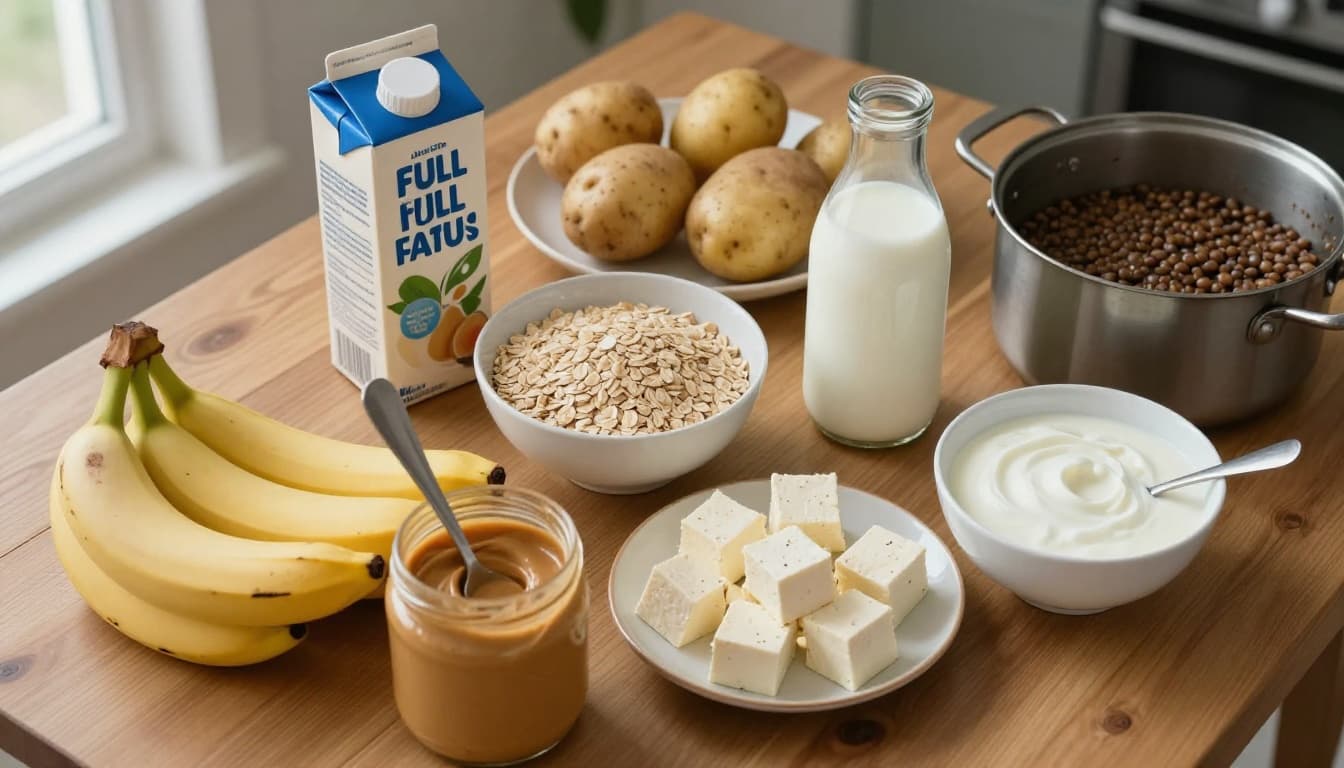 Simple meal-prep setup with calorie-dense staples for weight gain, created with AI.
Before the foods, get these basics right so the weight actually sticks
If you want weight gain that looks balanced (more muscle and shape, not just random softness), you need three foundations working together.
First is a small daily calorie surplus. Not a “stuff yourself till you can’t breathe” surplus. Think of it like stacking coins. A few extra calories daily adds up faster than one huge cheat day. If you’re underweight and your appetite is low, it’s often easier to add calories through dense foods (nuts, dairy, grains) than by doubling your vegetables.
Second is strength training, even the simple kind. When you lift, push, squat, and pull, your body has a reason to turn extra food into muscle. Without that signal, a lot of extra calories drift toward fat storage, and many people notice it first around the waist.
Third is sleep and digestion. Poor sleep makes training feel harder, reduces recovery, and can mess with hunger cues. Many people also digest heavier meals better earlier in the day, so make lunch your biggest meal and keep dinner lighter if you bloat easily. For evidence-based guidance on safe weight gain, see the NHS advice on healthy ways to gain weight.
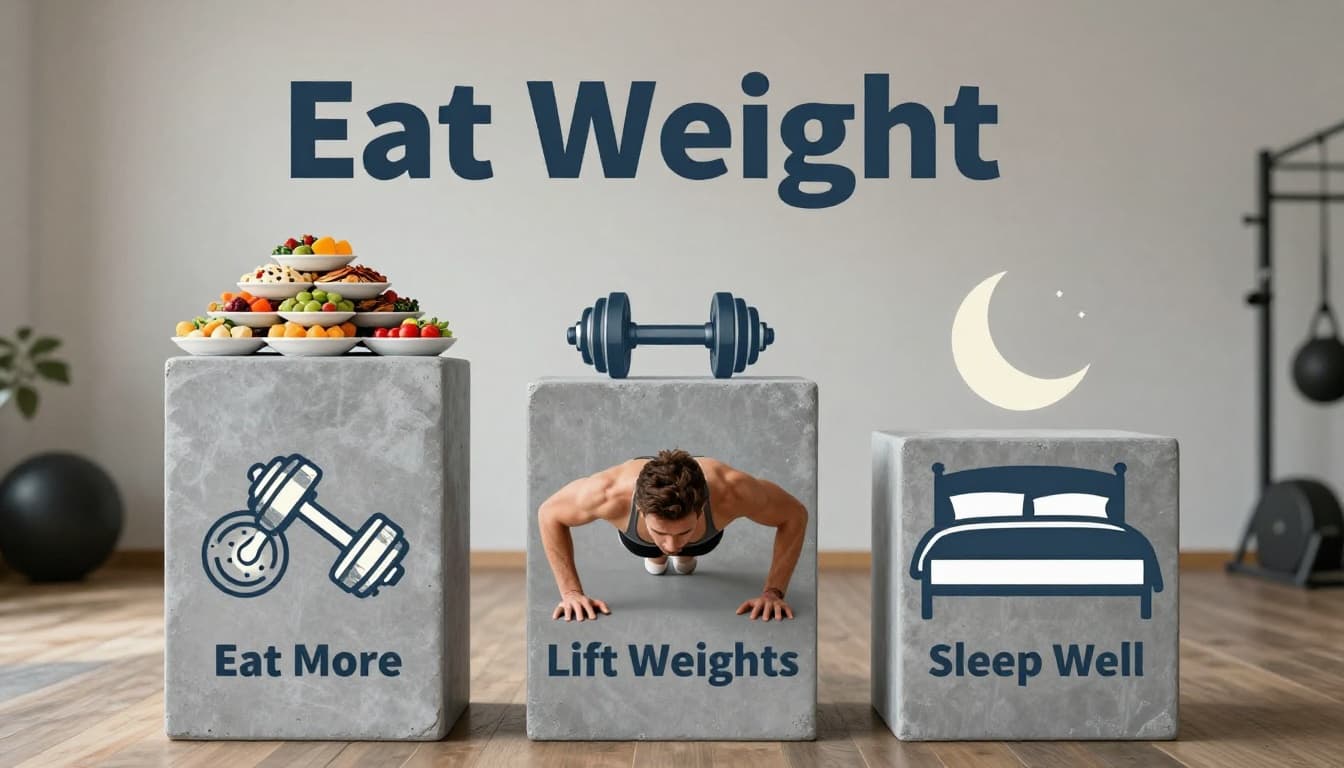 The three pillars that make weight gain more predictable, created with AI.
Heavy foods only help if you can digest them
Calorie-dense meals are powerful, but only if your stomach can keep up. If you’re constantly stuffed, you’ll skip meals, sleep poorly, and end up eating less overall.
A few simple habits help:
Move your body daily (even a walk) so hunger shows up on time, drink enough water through the day, and avoid stacking your heaviest foods late at night. If a big dinner causes reflux or bloating, shift those calories earlier. Digestion is like a fire, it burns best when you feed it steadily, not when you dump a whole log at midnight.
If you’ve been underweight for a long time or you’re losing weight without trying, it’s worth reading Mayo Clinic’s guidance for underweight adults and speaking to a clinician.
A simple weekly routine that supports healthy weight gain
You don’t need marathon workouts for weight gain. Too much hard cardio can make it harder to stay in a surplus, especially if you already struggle to eat enough.
A practical target is 20 to 30 minutes of resistance training, 3 to 5 days per week. Keep it simple: push-ups (or incline push-ups), squats, lunges, rows (with a band or backpack), and planks. Consistency beats intensity here. This style of training tends to increase appetite, improve digestion for many people, and helps your body “place” extra calories where you want them.
5 best foods for rapid weight gain (naturally), with easy ways to eat them
The foods below are picked for one reason: they make it easier to eat more without relying on ultra-processed powders and sugary snacks. Each option is affordable, mostly vegetarian-friendly, and easy to repeat.
If you want a broader list of calorie-dense choices, you can also scan Healthline’s overview of healthy foods to gain weight, then come back and build meals around the five staples here.
Bananas plus peanuts or peanut butter: fast calories with a good balance
Bananas bring quick carbs. Peanuts bring calorie-dense fats and a bit of protein. Put them together and you get a combo that’s easy to eat even when your appetite is average.
Two easy options work well:
- Eat 2 to 3 ripe bananas with a handful of peanuts.
- Blend a simple smoothie: 3 ripe bananas + 2 spoons peanut butter + 1 glass water.
Many people find banana with milk feels heavy or causes bloating, so using water can make this smoother to digest while still staying creamy. A banana peanut butter smoothie like this is roughly 550 calories, about 60 g carbs, about 10 g protein, and about 16 g fat (estimates vary by banana size and peanut butter amount).
Timing tip: this works well 2 to 3 hours after lunch as a calorie boost, or as a quick breakfast when you’re rushing.
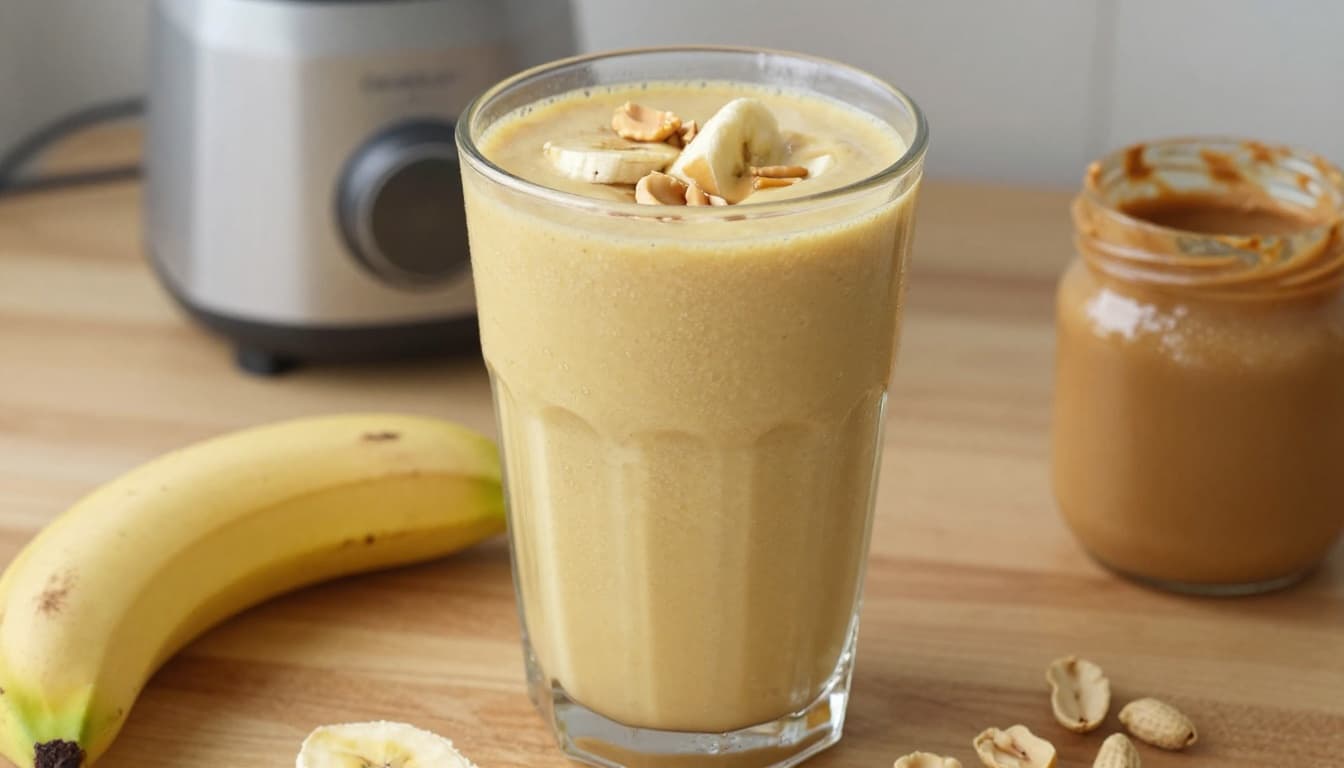 Banana and peanut butter smoothie setup for a quick calorie bump, created with AI.
Milk plus grains (dalia or oats): one bowl can add a lot of calories
If there’s one “quiet hero” for weight gain, it’s the milk-plus-grains combo. It’s real food, it’s filling without being junky, and it naturally brings carbs, protein, and fat in one bowl.
A simple dalia method: lightly roast dalia in a little ghee for a couple minutes, then cook it low and slow in milk, adding a bit of water so it cooks evenly and doesn’t get overly thick. Sweeten with jaggery if you like, and toss in raisins, dates, or a few nuts.
Hostel-friendly option: add rolled oats to a bowl, pour hot milk over it, and let it sit 5 minutes. Top with dates or raisins, and a few cashews. If you want dessert vibes, a little cocoa powder works.
Depending on add-ins and portion size, this breakfast often lands around 600 to 700+ calories, which is exactly what many “hard gainers” need: a strong start that doesn’t require constant snacking.
Curd with boiled potatoes: a simple, filling bowl that feels like a mini mass gainer
This combination works because it stacks energy in a way your body can use: potatoes provide starch and calories, and curd adds protein and fat. It’s also easy to chew and finish, which matters when appetite is low.
Quick recipe: take a big bowl of curd, mix in 2 boiled potatoes chopped into chunks (skin on if you tolerate it), then add rock salt, black pepper, and cumin. Want more calories? Add a small handful of boiled peanuts.
Portion-dependent, this can be roughly 400 to 500 calories. It fits as a breakfast side, a lunch side, or a daytime snack. Many people digest it best earlier in the day, so if it makes you feel heavy at night, keep it away from bedtime.
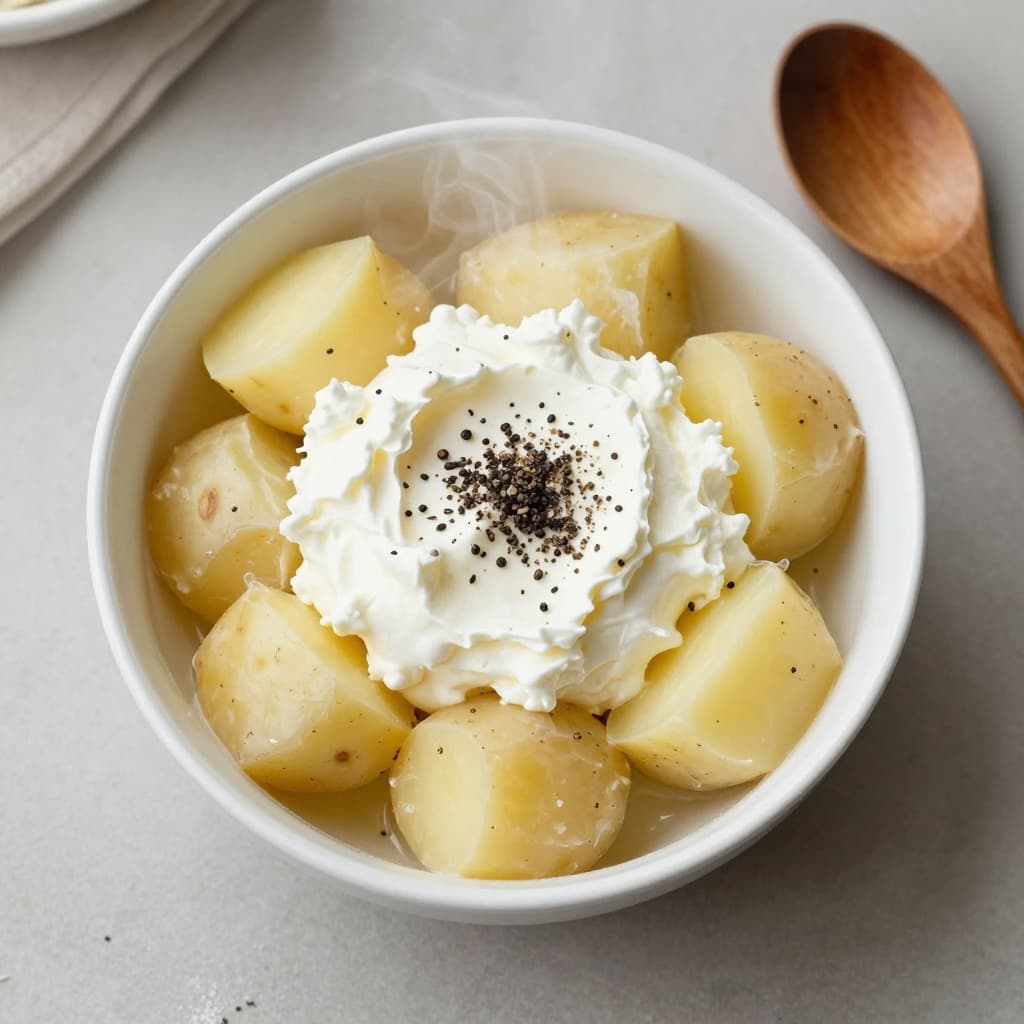 Curd mixed with boiled potatoes and spices for an easy calorie-dense bowl, created with AI.
Paneer: an easy way to push protein higher without powders
Weight gain isn’t just about calories, it’s also about what those calories build. Protein supports muscle growth, but it only turns into noticeable shape when you also train.
Paneer makes this simple. A solid serving in a curry, bhurji, or stir-fry can deliver roughly 30 to 40 g of protein (depending on the portion and brand). For most people trying to gain, including paneer 3 to 4 times per week is a practical target that doesn’t require protein powders.
Easy ways to eat it without getting bored: paneer bhurji with paratha, paneer curry with rice and roti, or a paneer sandwich with a little butter or ghee if you tolerate dairy fats well. The goal isn’t perfection, it’s repeatable meals you’ll actually keep eating.
Hearty dals and beans (especially black urad): calories plus protein that builds strength
Dals and beans are classic weight gain foods because they bring both carbs and protein. They also pair easily with rice and roti, which helps you eat more without thinking too much.
Great options include kala chana, kabuli chana, rajma, and lobia. If you want one standout choice, black urad is often seen as a “strength” dal in traditional food culture, and many people find it especially satisfying. Aim for it 2 to 3 times per week.
To increase calories without turning meals into junk, add a little ghee or butter to the dal. It improves taste, adds energy density, and makes it easier to hit your surplus. Need snack ideas on days you can’t face another full meal? See these high-calorie snack ideas for healthy weight gain and borrow a couple that fit your routine.
A simple day plan using these foods (no complicated tracking)
A good weight gain day doesn’t feel like you’re eating all day long. It feels structured. You hit a strong breakfast, a heavier lunch, and one calorie-dense snack, then you keep dinner simple so sleep stays solid.
Also, don’t underestimate the lunch combo that many naturally thin people skip: roti plus rice together, with dal or beans on the side. It’s an easy way to add carbs without forcing extra snacks. If digestion is a weak spot for you, make lunch the “main event” and keep dinner lighter.
Hydration matters too. Heavy foods digest better when you’re drinking water through the day, not chugging a liter at night.
Sample schedule from morning to night
- Breakfast (8 to 10 am): Milk dalia (with jaggery and a few nuts) or oats soaked in hot milk with dates or raisins.
- Lunch (1 to 3 pm): Roti plus rice, dal or rajma, and a bowl of curd.
- Snack (4 to 6 pm): Banana + peanuts, or the banana peanut butter smoothie (water-based if milk feels heavy).
- Dinner (8 to 9:30 pm): Simple roti sabzi or dal rice, keep portions comfortable.
- Optional (before bed): Warm milk if it suits your stomach and doesn’t disrupt sleep.
If you want more official guidance on building weight steadily with nutritious foods, this NHS Foundation Trust handout on gaining weight in a healthy way is a helpful reference.
Common mistakes that slow weight gain
One big mistake is trying to “hack” weight gain with junk. Refined sweets, fried snacks, and sugary powders can add calories, but they often add them in a way that’s easy to overdo and hard to digest. Many mass gainers are basically processed carbs with very low fiber, so you may gain, but it’s often soft weight around the stomach.
Other common issues are simple: skipping strength training, doing lots of cardio when you already struggle to eat enough, eating huge late dinners that mess with sleep, and being inconsistent with meals. Your body can’t build from “random.” It builds from patterns.
Conclusion
For the next 7 days, keep it simple: pick two foods from this list (like milk oats at breakfast and the banana peanut butter smoothie as your snack) and make them non-negotiable. Pair that with 20 to 30 minutes of resistance training most days, even if it’s just push-ups and squats at home. Then protect recovery with 7 to 8 hours of sleep, ideally getting to bed before 11 pm, so your body can actually use what you’re eating.
Steady weight gain looks boring on paper, but in the mirror, it’s hard to miss.


0 Comments