
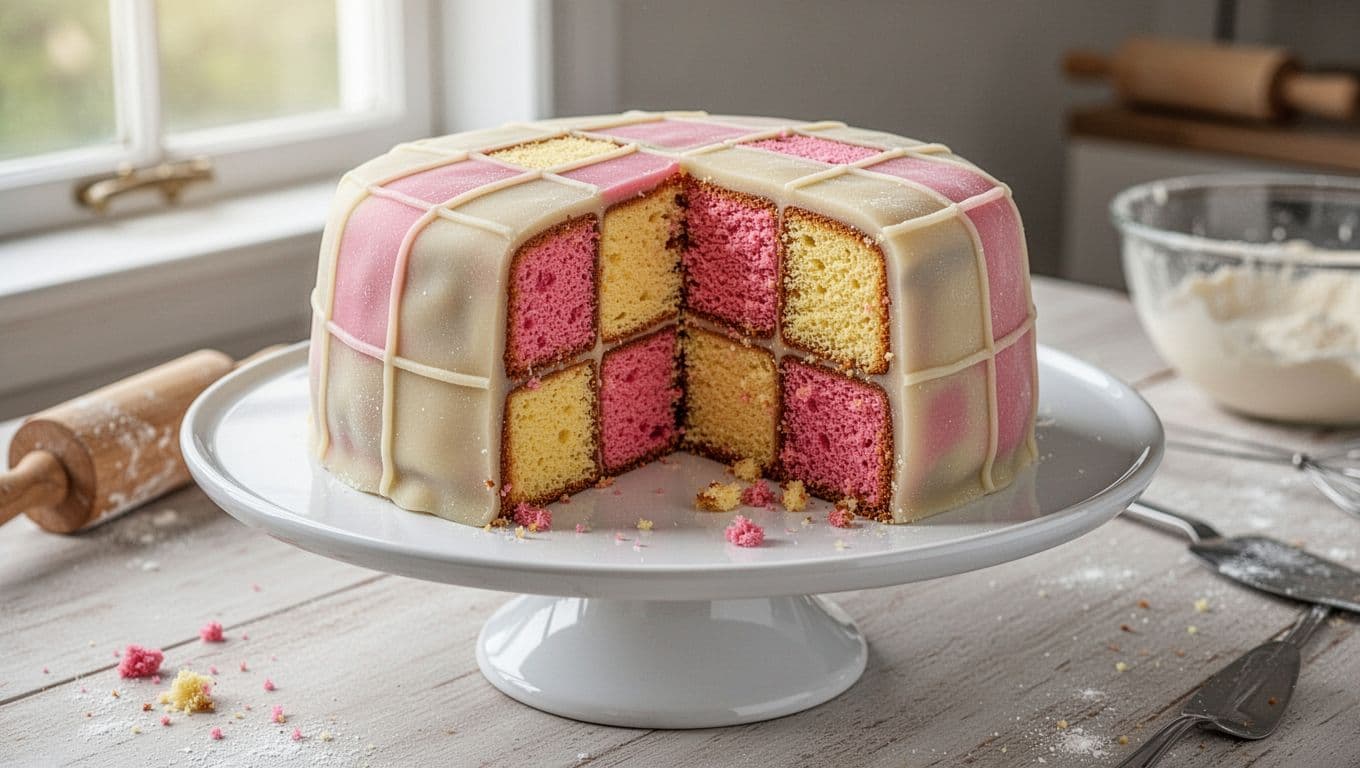
 Homemade Battenberg cake with a classic checkerboard center, created with AI.
Battenberg cake looks like something you’d buy from a fancy bakery case. The truth is way less intimidating: it’s two simple sponges, a thin swipe of jam, and a marzipan wrap that does most of the visual work.
If you can bake a basic butter cake, you can make Battenberg. The “wow” moment is really just careful cutting and stacking, like building a neat little checkerboard out of cake bricks.
This post walks you through the whole flow: bake one yellow sponge and one pink sponge, trim them into even strips, glue them together with jam, then roll the whole thing up in marzipan. It’s a great weekend project, and it can still match a budget recipe approach if you plan ahead (because yes, marzipan is usually the pricey part).
What you need for Battenberg, plus smart swaps to keep costs down
Battenberg is basically a “pantry cake” wearing a marzipan coat. Most of your cost sits in that coat, so call it out early and shop it like you mean it.
A simple ingredient set (butter, sugar, self-raising flour, eggs, vanilla, jam, and a little red or pink coloring) makes the two sponges. Then you add marzipan to wrap it all up. In one real-world budget bake example, the core ingredients were inexpensive, but the ready-to-roll marzipan was the biggest line item. The full cake landed at about £5 total and cut into around 8 hearty slices, plus offcuts you can snack on or repurpose.
In the US, your total can swing a lot by brand and where you shop. With grocery prices still feeling tight and recent food inflation running around the low single digits year over year, it’s normal to see marzipan push a Battenberg into “treat bake” territory. Recent store pricing trends put a typical homemade Battenberg around $17 to $24 if you’re buying everything from scratch, with marzipan often costing as much as the butter and eggs combined.
If you want a reference point for a classic, home-friendly method, compare a couple approaches like the Battenberg guide from Taste of Home’s Battenberg recipe.
You’ll also want a few basic tools:
- Two small loaf tins (or one square tin, then split the batter)
- Baking paper or parchment
- Kitchen scale (this matters more than people admit)
- Skewer or toothpick for doneness
- Serrated knife for clean slicing
- Rolling pin
- Icing sugar (powdered sugar) for dusting
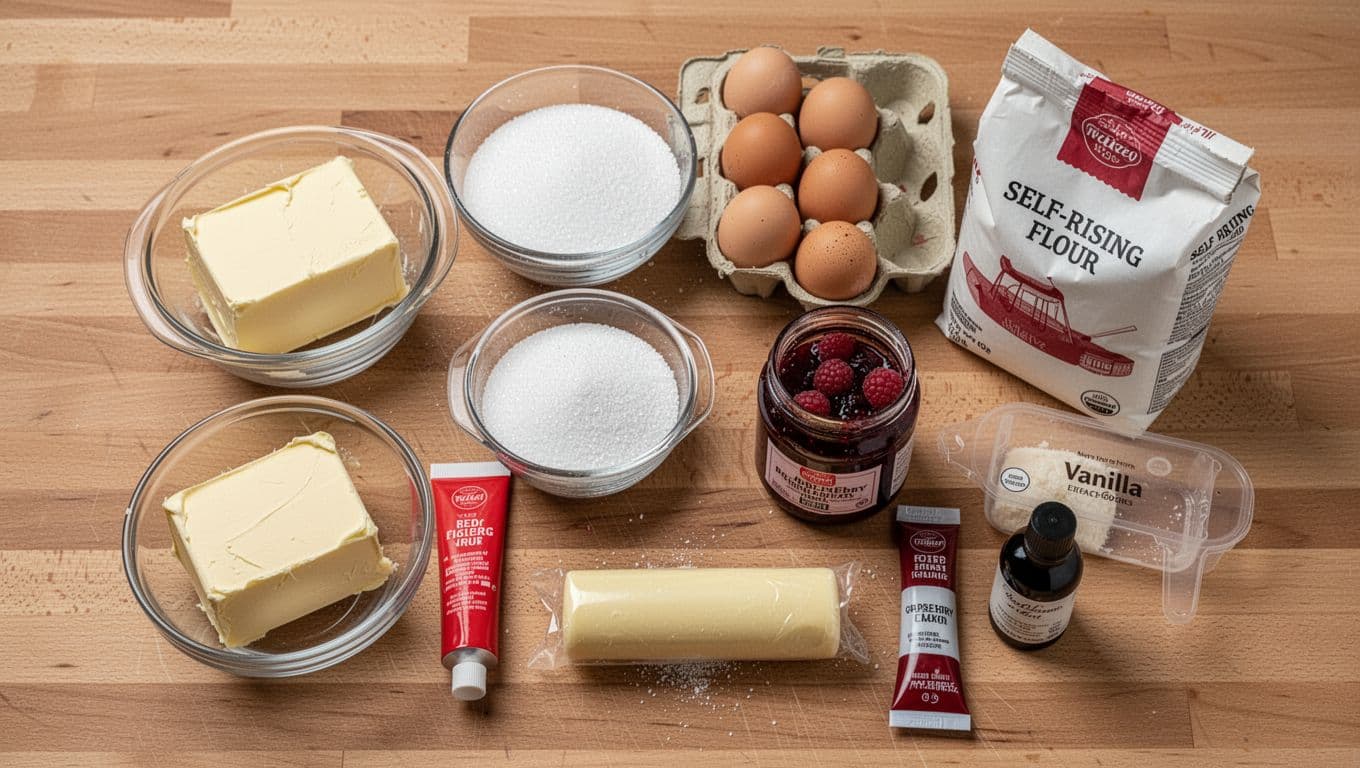 Ingredients laid out before baking, created with AI.
Ingredient list that makes a light sponge every time
This is the reliable “equal weights” sponge that stays fluffy and easy to shape:
- 200 g (about 1 cup) softened unsalted butter
- 200 g (about 1 cup) sugar
- 4 large eggs
- 200 g self-raising flour (or all-purpose flour plus baking powder)
- 1 tsp vanilla extract
- Optional: a tiny splash of almond extract (classic Battenberg vibe)
- A few drops red or pink food coloring
- 2 to 4 tbsp jam (raspberry, apricot, strawberry, whatever you like)
- 1 pack ready-to-roll marzipan (usually 9 to 18 oz total, depending on brand and cake size)
The “light sponge” part isn’t magic. When you cream butter and sugar until pale and fluffy, you’re trapping air so the cake rises without getting heavy. When you add flour, fold gently, because aggressive mixing knocks that air out. Think of it like whipping air into a sweater, then trying not to squash it flat.
If you’re curious about a more almond-forward style with homemade marzipan, Food52’s Battenberg recipe is a helpful look at how some bakers push flavor while keeping the structure classic.
Budget swaps that do not hurt the final cake
A Battenberg can still fit a budget recipe mindset if you treat it like a planned treat and cut waste.
Here are swaps that keep the result strong:
- Plain flour plus baking powder: If you don’t keep self-raising flour, add baking powder to all-purpose and you’re back in business.
- Any jam works as “glue”: Raspberry is traditional, apricot is common, strawberry tastes great. The jam is mainly there to stick cake to cake and cake to marzipan.
- Basic food coloring is fine: You only need a little for a clear pink. Gel is stronger, but cheap liquid coloring still works.
- No special Battenberg tin needed: Two loaf tins are easy and cheap, and trimming handles the rest.
- Marzipan strategies: Watch for sales around holidays, buy extra, and freeze it well wrapped. If almonds are affordable near you, homemade marzipan can be cheaper, but prices vary a lot.
- Offcuts aren’t waste: Those trimmed bits make quick “extras,” like cake balls, mini truffles, or simple marzipan shapes for kids to decorate.
If you like this kind of planned, low-waste baking, this related post on soft iced bakery-style buns on a budget is another good weekend project with a clear cost-per-piece payoff.
Bake the two sponges, one yellow and one pink
Start simple. Preheat your oven to 170 to 180 C (about 350 F). Grease and line two small loaf tins with parchment so you can lift cakes out cleanly. If you only have one tin, bake in two rounds, but try to keep batter amounts equal.
Cream the softened butter and sugar until it looks lighter in color and fluffy. Add eggs one at a time, mixing between each addition. Stir in vanilla (and almond extract if using). Then fold in the flour gently. If you’re using all-purpose flour, whisk in baking powder first so it spreads evenly.
Now comes the signature Battenberg move: split the batter into two equal halves. Leave one half plain (your “yellow” sponge). Tint the other half pink with a small amount of red coloring. Add a few drops, mix, then decide if you want it deeper. It’s easier to darken than to undo “too neon.”
Bake for about 20 to 30 minutes. Check with a skewer. If it comes out clean (or with a few dry crumbs), they’re done. Cool them in the tins for 10 minutes, then turn out onto a rack to cool fully.
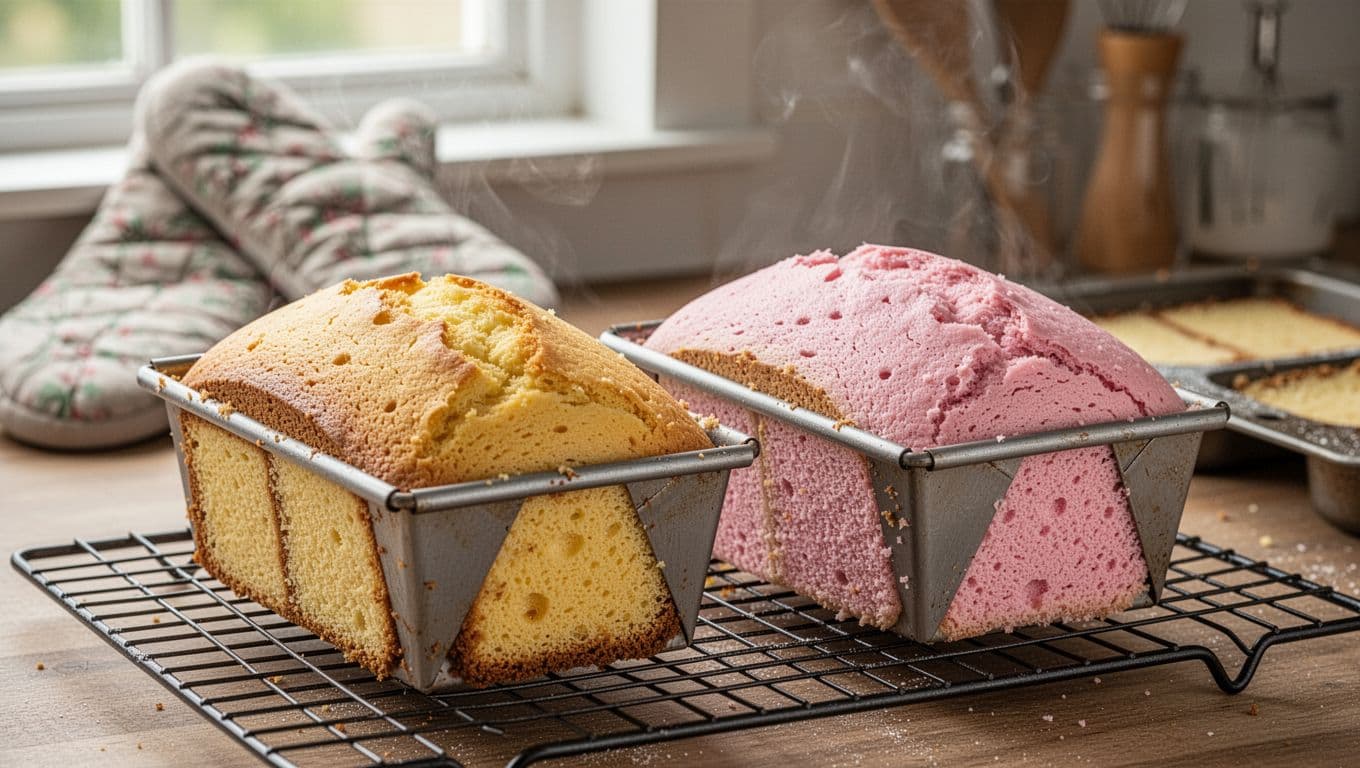 Two sponge colors cooling before trimming and stacking, created with AI.
The easiest way to split batter evenly is to weigh it
Even batter matters because an uneven checkerboard looks messy fast. A scale fixes this in under a minute.
- Put a bowl or jug on the scale and zero it out (tare).
- Add all the batter and note the total weight.
- Divide by two.
- Transfer half into a second bowl until you hit that half number.
This is the same practical approach many budget bakers use when they want consistent results without special pans. It also reduces trimming waste, which helps your budget recipe logic go further.
For another traditional method that also uses batter splitting and a Battenberg tin option, Silverwood Bakeware’s Battenberg recipe is a solid reference.
Baking and cooling tips so the cake is easy to cut cleanly
Don’t worry if the tops dome a bit. You’re trimming anyway. What matters is letting the cake cool all the way before you start slicing and assembling.
Warm sponge is fragile. It compresses under the knife, smears when jam hits it, and tears when you try to lift strips. A fully cooled sponge acts more like a soft bread loaf, it holds together and slices clean.
If your kitchen is warm, you can chill the cooled cakes for 20 to 30 minutes before trimming. That little firm-up time makes the “square everything up” step feel calm instead of chaotic.
Build the checkerboard and wrap it in marzipan without stress
This is the part people overthink, but it’s really just geometry plus jam.
First, trim both cakes into neat rectangles. Use a serrated knife and gentle sawing motions. Slice off domed tops if needed, then trim edges so both sponges match in size. Save those trimmings. They’re delicious, and they’re also your “extra treats” later.
Next, cut each sponge lengthwise into two equal long strips (so you end up with four strips total, two yellow and two pink). The goal is equal width and equal height. If one strip is a little taller, trim it down so the checkerboard sits flat.
Now assemble the checkerboard. Spread a thin layer of jam on the long side of a yellow strip, stick a pink strip to it. Repeat with the other two strips. Then spread jam on top of the two-strip base and stack the second two-strip piece on top, swapping colors so you get the classic pattern.
If you want a more traditional “Battenburg” style recipe with a similar jam-and-marzipan finish, Allrecipes’ Battenburg cake recipe is a useful comparison for ingredient ratios and timing.
Trim, cut, and stack: the simple checkerboard method
Use this quick order so you don’t get lost halfway through:
- Square the cakes by trimming tops and edges.
- Cut each cake into 2 equal long strips.
- Spread a thin layer of jam on the side of one strip.
- Stick a second strip to it (yellow to pink).
- Jam the top of the two-strip base.
- Stack the other two strips on top with colors swapped.
Any jam works here. It’s mostly a sticky “glue” with a bonus hit of sweetness. Keep the jam layer thin so it doesn’t ooze out and stain the marzipan.
Rolling and wrapping marzipan so it looks bakery neat
Dust your counter with icing sugar so the marzipan won’t stick. Roll it into a rectangle long enough to wrap around your cake with a small overlap. If you’re eyeballing it, aim for “wraps fully with a seam,” not “barely reaches.” A slightly thicker sheet is safer too, because thin marzipan tears.
Brush a thin layer of jam onto the marzipan (or lightly brush the cake), then set the cake along one edge and roll it up. Press the seam gently to seal, pinch it together, then flip the cake seam-side down so it hides underneath. Trim the ends for sharp edges.
Quick fixes if things go weird:
- Marzipan cracking: Knead it briefly to soften, then roll again. Patch small cracks with a bit of extra marzipan and smooth with warm hands.
- Jam leaking out: Use less jam next time, and keep it away from the outer edges. Wipe any squeeze-out before wrapping.
- Uneven blocks: Trim strips to match before stacking. It’s easier to fix early than to force it straight later.
To stretch value, turn leftover cake and marzipan bits into bite-size sweets: crumble cake, mix with a little jam, roll into balls, then press tiny marzipan caps on top. It’s the kind of “nothing wasted” move that makes a treat bake feel more like a smart budget recipe.
Conclusion
Making Battenberg at home is simpler than it looks. You bake two basic sponges, split and color one, then the checkerboard comes from careful trimming and stacking. Jam does the sticking, marzipan does the “bakery finish,” and suddenly your kitchen feels like a cake shop.
If you’re watching costs, focus on the marzipan. Buy it on sale, freeze extras, or make your own if almonds are priced well near you. And don’t toss the offcuts, they’re extra treats in disguise. Try it once, then switch it up with a different jam, mini Battenbergs, or a slice alongside strong coffee or tea for that classic budget recipe comfort.


0 Comments