
Ever look at a Belgian bun in a bakery and think, I love you, but you’re not in the budget today? Good news, you can make a tray of six at home for about £1.39 total, which works out at roughly 23p per bun.
These are the classic ones: soft sweet dough, a tangy lemony layer, sultanas tucked into the swirl, and a thick white icing finish with a cherry on top. The method is simple, but it feels like a little weekend project: basic ingredients, a bit of kneading, two rises, then a short bake and an easy icing. If you want a budget recipe that still feels like a treat, this is it. They’re perfect with tea, and they’re even better with strong coffee.
 Finished Belgian buns with thick icing and a cherry topping, created with AI.
What you need to make Belgian buns on a tight budget
You don’t need fancy ingredients here, just the usual baking basics and a couple of sweet extras. This recipe makes 6 Belgian buns.
Ingredients (with exact amounts)
- 225 g strong bread flour
- 1 sachet yeast
- 40 to 45 g sugar (either is fine)
- 85 ml milk
- 1 egg
- 25 g butter
- About 3 tbsp lemon curd
- 75 g sultanas
- 125 g icing sugar
- Cold water for the icing (1 to 1 and a half tbsp total)
- 3 glacé cherries (cut into halves, so 6 pieces)
If you want to compare approaches or check what “traditional” looks like, this Belgian buns recipe is a helpful point of reference.
Basic tools
A mixing bowl, spoon, rolling pin, knife, baking tray, baking paper (optional), and a clean tea towel. A pastry brush is handy, but not required.
Quick cost breakdown (example)
Prices vary by shop and time, but here’s a real-world breakdown that lands at about £1.39 for six buns:
| Ingredient | Example cost |
|---|---|
| Flour (225 g) | £0.24 |
| Yeast (1 sachet) | £0.08 |
| Sugar (40 to 45 g) | £0.04 |
| Milk (85 ml) | £0.05 |
| Egg (1) | £0.14 |
| Butter (25 g) | £0.19 |
| Lemon curd (3 tbsp) | £0.09 |
| Sultanas (75 g) | £0.16 |
| Icing sugar (125 g) | £0.31 |
| Cherries (3) | £0.09 |
| Total | £1.39 |
Per bun cost: £1.39 ÷ 6 = £0.231, so about 23p each.
To keep it cheap, swaps are allowed: jam or marmalade instead of lemon curd, raisins instead of sultanas, or skip cherries if you need to.
Timing guide: about 10 minutes kneading, 1 hour first rise, 1 hour second rise, 15 to 20 minutes baking, then cooling and icing.
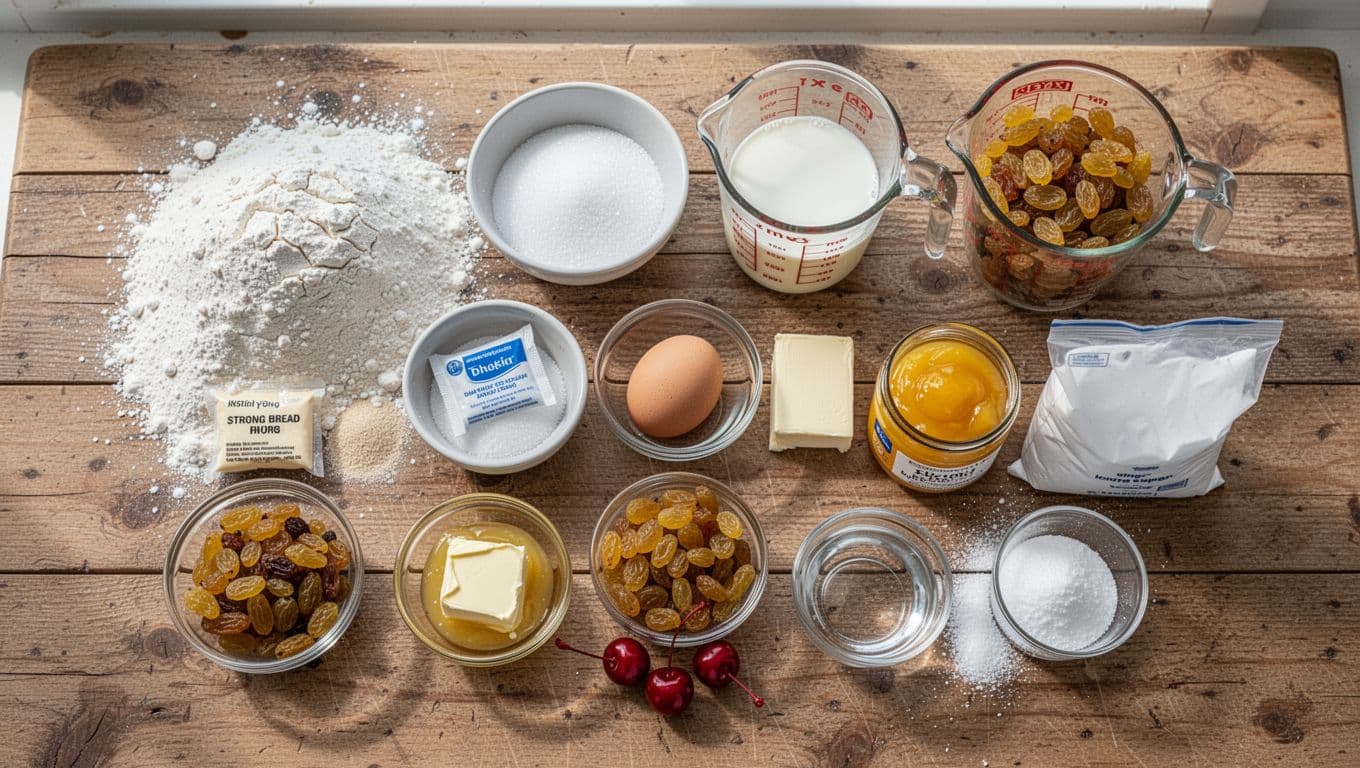 Budget-friendly ingredients laid out before baking, created with AI.
Money saving swaps that still taste great
You can shave the cost without making the buns feel “budget” in a sad way.
- Go own-brand on the basics: Flour, sugar, and icing sugar are usually cheapest as store-brand, and you won’t taste the difference in a sweet bun.
- Use what’s open: Half a jar of lemon curd in the fridge is perfect. If not, jam or marmalade works well and still gives that sticky layer.
- Buy dried fruit bigger, not smaller: Larger bags often cost less per 100 g, and sultanas keep for ages.
- Margarine can sub for butter: You’ll lose a bit of richness, but it still bakes up soft.
- Icing with water, not milk: Water is enough to make a thick topping that sets.
- Stretch the cherries: Three cherries cut in halves gives the classic look for all six buns.
One habit that pays off fast is comparing price per 100 g on shelf labels. Also, if you’re already doing the kneading, bake a double batch and freeze some buns before icing.
Step-by-step Belgian buns, from dough to cherry on top
This is a sweet bread dough, so think “soft and springy” rather than “cookie dough.” Take it one stage at a time.
- Warm the milk until it’s lukewarm (not hot).
- In a jug, mix the yeast with 1 tsp of the sugar, then pour in the lukewarm milk. Leave it about 10 minutes until it looks a bit foamy.
- In a bowl, mix flour, the beaten egg, the rest of the sugar, and the melted butter. Pour in the yeast mixture and stir until a dough forms. If it feels too wet, add a pinch more flour.
- Knead for about 10 minutes until smooth and springy.
- Put the dough in a greased bowl, cover with a tea towel, and leave in a warm spot for 1 hour until it grows a lot in size (an oven with the light on works well).
- Press the dough down to knock out the gas, then roll it into a long oblong.
- Spread lemon curd across the surface, but leave a small clean strip at one edge to seal. Sprinkle over the sultanas.
- Roll it up tightly, like cinnamon rolls, then trim the ends and cut into 6 slices.
- Place on a tray, cover, and leave for another hour.
- Bake at 180 C for 15 to 20 minutes until puffed and nicely browned. Cool completely before icing.
For extra technique tips on working with enriched doughs, this Belgian bun guide is a solid bake-along style resource.
Common mistakes to avoid: milk that’s too hot (it can stop the yeast), rolling the log loosely (you lose the neat swirl), and icing while warm (it slides right off).
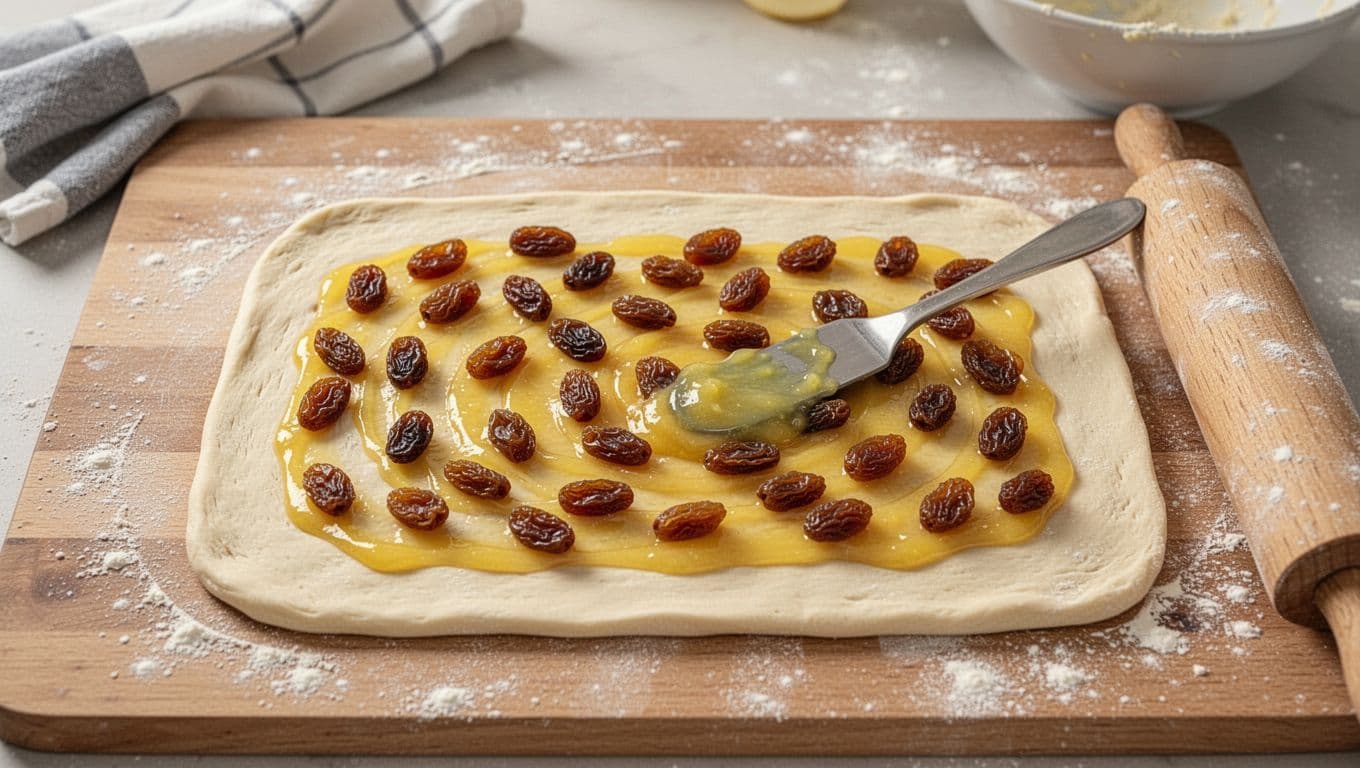 Dough rolled out with lemon curd and sultanas, ready to shape, created with AI.
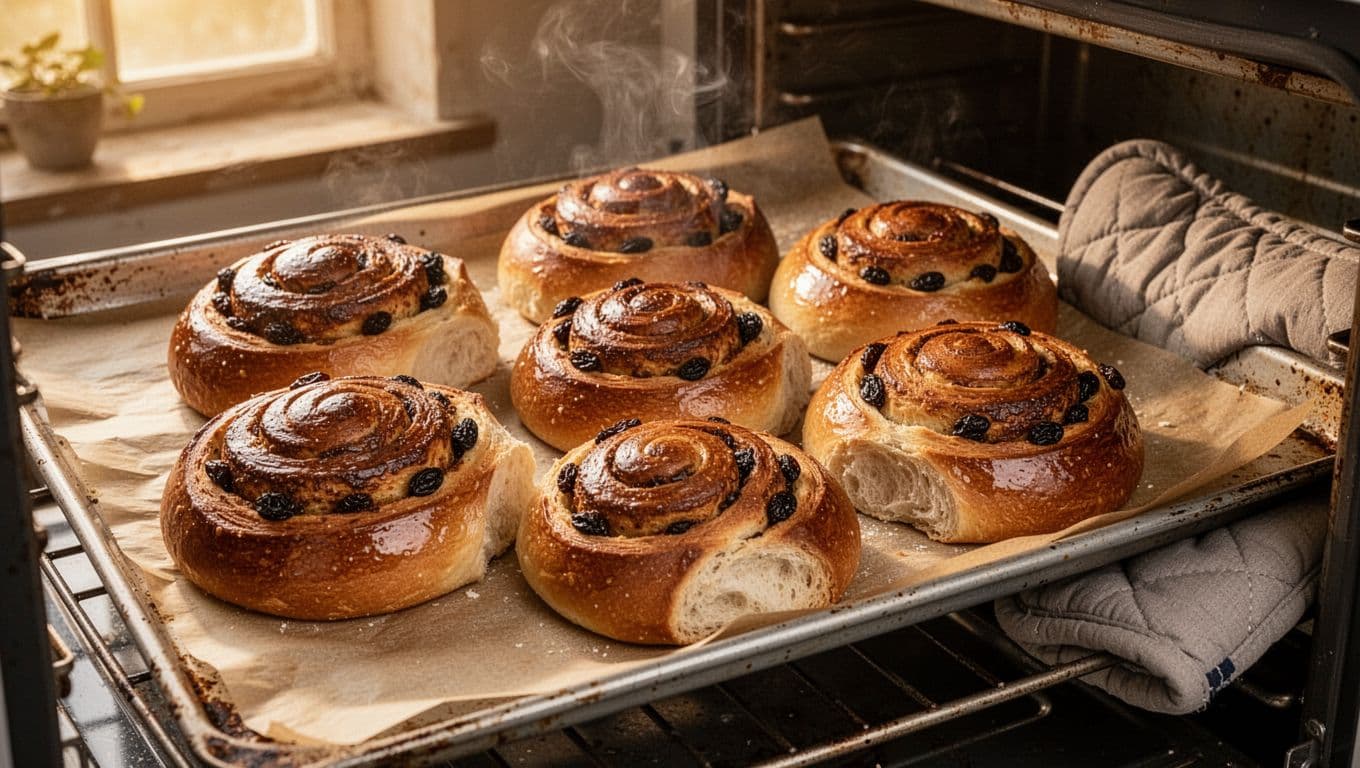 Freshly baked buns cooling before icing, created with AI.
How to tell when the dough is ready (even if you are new to bread)
Use your hands more than the clock. The dough should feel soft and elastic, not gluey. If you poke it gently, it should spring back.
After the first rise, it should look noticeably larger, close to doubled in size. In a cold kitchen, it can take longer than an hour, and that’s fine. Give it time and keep it covered so it doesn’t dry out.
When you roll the dough into a log, it should feel tight and even. If it’s loose, the buns can unroll slightly while proving and baking.
Easy icing that stays put, not runny
Wait until the buns are fully cool. Warm buns make icing melt, then you get a thin glaze instead of that classic thick cap.
Mix 125 g icing sugar with 1 tbsp cold water. Stir, then add about another half tbsp only if needed. You’re aiming for a stiff, spreadable icing that doesn’t drip off the sides.
Spread it on top, then finish with half a glacé cherry on each bun. That small red dot does a lot of work.
Serving, storing, and making the most of your batch
Belgian buns are at their best on the day you bake them, when the crumb is soft and the lemon smell still comes through. Serve them with tea, or pair them with strong coffee if you like that bitter-sweet combo.
Store leftovers in an airtight container for 2 to 3 days. If they feel a bit firm on day two, give one a short warm-up (just enough to soften it), then let it cool a few minutes before eating so the icing doesn’t get messy.
Freezing tip: freeze buns without icing. Thaw at room temp, then ice fresh. If you enjoy seeing how other bakers tweak fillings (custard-style, extra spice, different fruit), this homemade Belgian buns post has nice variation ideas.
And yes, it’s worth repeating: around 23p each for a proper bakery-style treat is hard to beat.
Conclusion
Homemade Belgian buns hit that sweet spot: cheap ingredients, simple steps, and a result that feels like a weekend reward. You get the tang of lemon curd, the chew of sultanas, and that classic icing-and-cherry finish without paying bakery prices.
Bake a batch, tweak the filling if you want, and keep track of your total spend. The best part is pulling out a tray of buns and knowing you made them for pennies, not pounds.


0 Comments