
Some muffins look great, then eat dry and crumbly by lunchtime. These easy oatmeal muffins aim for the opposite: soft centers, a cozy oat taste, and a batter that doesn’t punish beginners.
This Oat Muffins Recipe is also a true Budget Recipe. It uses basic pantry staples, comes together fast, and makes about 6 muffins, which is perfect if you don’t want a dozen hanging around. In one budget test run, the full batch worked out to roughly 62p total (about 10p per muffin), though your exact cost will depend on where you shop and current prices.
The method is simple: soak the oats first, mix your dry ingredients, stir your wet ingredients into the softened oats, then fold everything together and bake. No mixer, no fancy steps, and no “secret” ingredients you’ll only use once.
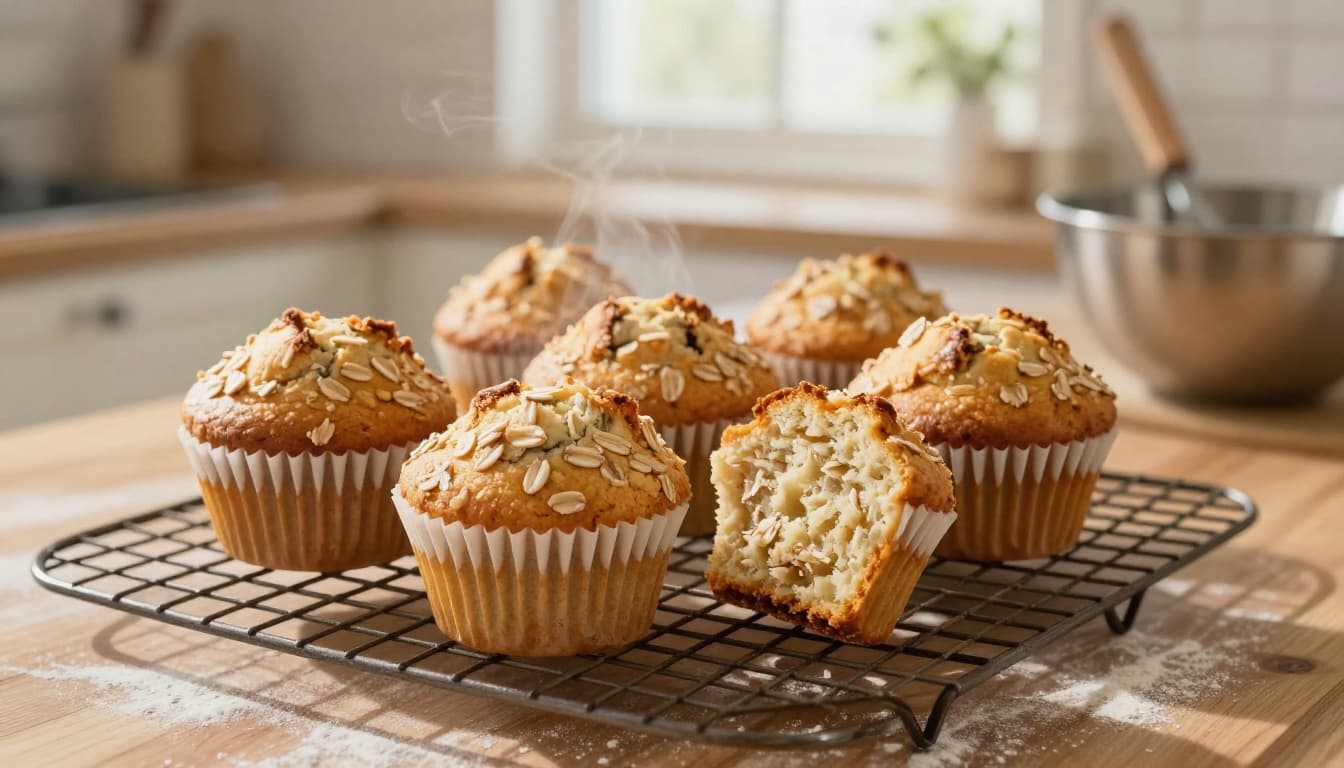
Fresh oat muffins cooling on a rack with a soft, moist crumb, created with AI.
What makes these easy oatmeal muffins work every time
This recipe succeeds for the same reason a good routine works: each step has a job, and none of them are complicated.
First, soaking the oats in milk for about 10 minutes changes the whole texture. Dry oats steal moisture from batter as they bake. When they get a head start in milk, they soften and swell before they ever hit the oven. That gives you muffins that feel tender instead of chewy or dry. It also helps the oat flavor spread through the crumb, so the muffin tastes “oat-y” without feeling heavy.
Second, the batter is mixed in a way that protects softness. Muffins turn tough when flour gets worked too much. This recipe has you fold the dry ingredients into the wet just until you stop seeing dry flour. Think of it like stirring paint: once the streaks are gone, stop. The batter should look thick and a little rustic, not smooth like cake batter.
Third, the lift is dependable because it uses baking powder plus a small amount of baking soda. Baking powder provides steady rise, while baking soda gives an extra push when it meets acidic or warm, wet batter. You’re not relying on one leavener to do all the work.
Finally, the flavor is built with small, smart choices: cinnamon for warmth, a pinch of salt to keep sweetness from tasting flat, brown sugar for a deeper, slightly caramel note, plus vegetable oil and an egg to keep the center moist even the next day. If you like comparing recipes, you’ll notice this same “soak plus gentle mixing” idea in many reliable oatmeal muffin approaches, including a moist oatmeal muffins method.
Quick ingredient list with simple swaps
Here are the base amounts for 6 muffins:
- Rolled oats: about 85 g
- Milk: about 120 ml
- All-purpose flour: about 60 g
- Baking powder: 1 tsp
- Baking soda (bicarbonate of soda): 1/2 tsp
- Ground cinnamon: 1/2 tsp
- Salt: a pinch
- Brown sugar: about 60 g
- Vegetable oil: about 40 ml
- Egg: 1
Swaps that keep this a practical Budget Recipe:
- Milk: Any milk works (dairy or unsweetened plant milk). Even reconstituted powdered milk can work if that’s what you keep around.
- Brown sugar: White sugar is fine, but you’ll lose a little depth. Light brown or dark brown both work.
- Oil: Use any neutral oil. Melted butter works too (same amount), but the muffins may firm up more when cool.
- Add-ins: Blueberries, diced apple, raisins, or chocolate chips all fit. Keep the total add-ins to about 1/2 cup for 6 muffins so they still rise well.
Buying staples like oats, flour, and leaveners in larger bags usually drops the cost per batch. It’s the kind of simple math that makes home baking feel like a small win.
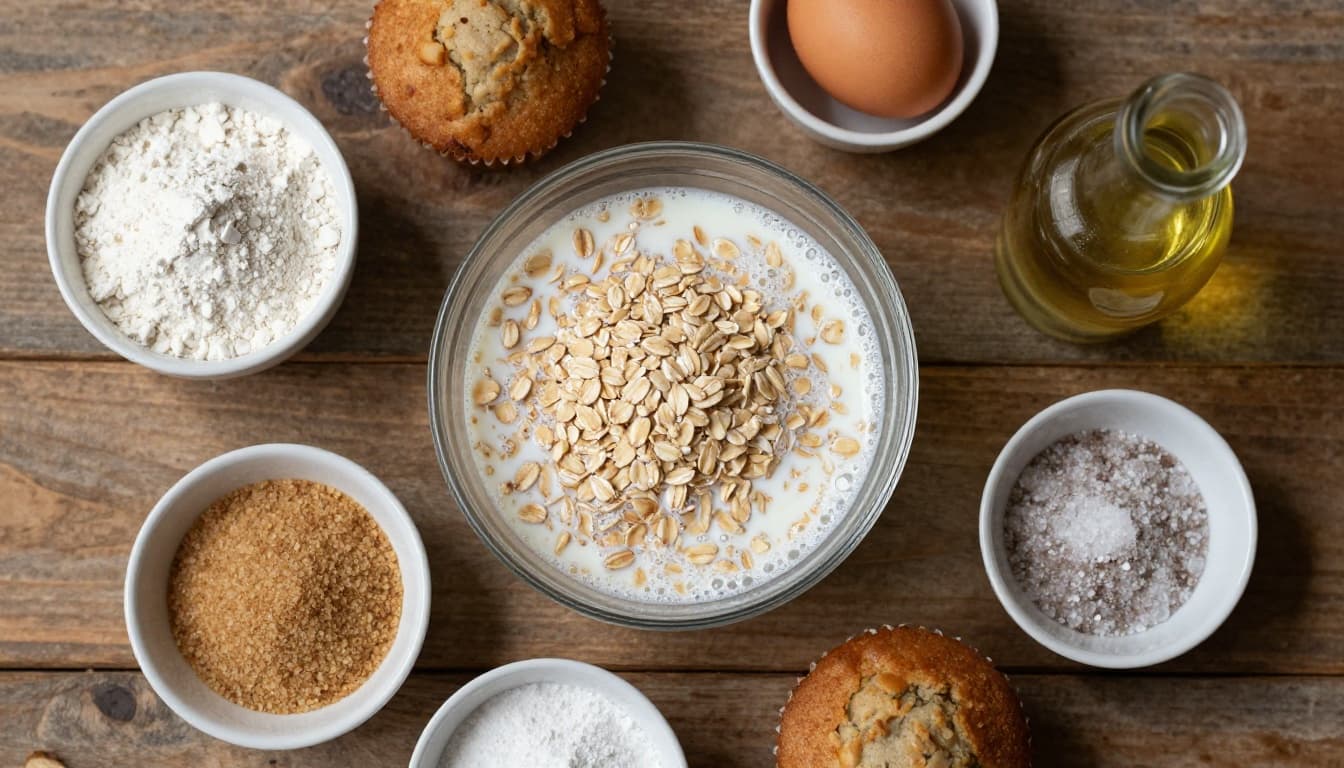
Ingredients laid out for a budget-friendly muffin batch, with oats soaking in milk, created with AI.
Tools you need, plus an easy paper liner trick
You don’t need much:
- Muffin tin (6-cup is perfect, a 12-cup tin is fine too)
- 2 mixing bowls
- Whisk or fork (for the egg)
- Spatula (best for folding)
- Measuring cups and spoons (or a kitchen scale)
- Skewer or toothpick (for doneness)
If you’re out of muffin liners, there’s a simple workaround: cut squares of greaseproof paper (about 6 by 6 inches). Press one square around the base of a drinking glass, then lift it off so it keeps the cup shape. Drop it into the tin, and once the batter goes in, it holds its form nicely. Store-bought liners work too, and greasing the tin lightly is also fine.
Step by step oat muffins recipe (from soaking to cooling)
These steps keep things clear and repeatable. Read through once, then bake.
- Heat the oven to 230 C (about 450 F). Place a rack in the middle.
- Soak the oats: Put the oats in a bowl, pour in the milk, stir, and let sit for 10 minutes.
- Mix dry ingredients in a second bowl: flour, baking powder, baking soda, cinnamon, and salt.
- Mix wet ingredients into the oats: whisk in the egg, then stir in the oil and brown sugar until the sugar loosens and looks mostly dissolved.
- Fold dry into wet with a spatula. Stop when you no longer see dry flour.
- Prepare the tin: line 6 cups (paper liners or the greaseproof paper trick).
- Portion the batter evenly into 6 muffins. The batter should look thick.
- Bake hot first for 6 to 7 minutes at 230 C.
- Reduce heat to 180 C (about 350 F) and bake about 10 minutes more.
- Test for doneness with a skewer or toothpick. It should come out clean (a few moist crumbs are okay).
- Cool: rest muffins in the tin for 5 minutes, then move to a rack.
Sensory cues help: the tops should look set and risen, the kitchen should smell toasty and cinnamon-warm, and the edges should show light browning.
Mixing the batter without overdoing it
The “don’t overmix” advice is everywhere, but here’s what it looks like in real life.
Start by letting the oats soften in milk. Ten minutes is enough for rolled oats to take on moisture and stop acting like dry sponges in the oven.
While they soak, stir together your dry ingredients in a separate bowl. Mixing the baking powder, baking soda, cinnamon, and salt through the flour now means you don’t need to over-stir later.
When the oats are ready, whisk in the egg first. Then add oil and brown sugar and stir until the sugar breaks up. It doesn’t need to fully dissolve like it would in a custard, it just shouldn’t be in big clumps.
Now the key moment: add the dry mix to the wet oat bowl and fold, don’t beat. Scrape the bottom and sides as you turn the batter over itself. Stop as soon as the dry streaks disappear. A few small lumps are normal, and they bake out.
If you keep stirring “just to be safe,” the muffins can turn dense or slightly gummy. Gentle mixing is how you keep the crumb light, even with oats in the batter.
Baking schedule, doneness test, and cooling
This recipe uses a two-temperature bake for a reason. The first hot blast (230 C) helps the muffins rise fast, setting the shape early. Dropping to 180 C lets the centers cook through without drying the edges.
Fill the muffin cups evenly. If you want six muffins of similar size, use the same scoop or spoon and go cup by cup, adding a little at a time. That prevents the last muffin from ending up tiny.
Doneness is simple:
- Skewer test: Insert a toothpick into the center. If it comes out clean, you’re done. If it’s wet with batter, bake 2 more minutes and test again.
- Look: Tops should be set and slightly springy when touched lightly.
- Color: Light browning around edges is a good sign.
Cooling matters more than it seems. Let them sit in the tin for about 5 minutes so they firm up, then move to a rack so steam doesn’t collect underneath. If you want a warm muffin right away, this is the sweet spot: warm, soft, and still holding together.
If you like seeing how other bakers handle mix-ins and timing, this add-your-own mix-ins version is a helpful reference for flavor ideas.
Make them your own, store them well, and keep the cost low
These muffins are friendly to small changes, which is exactly what you want from a Budget Recipe. You can use what you have, avoid waste, and still get a batch that feels like a treat.
For serving, they’re great warm on their own. If you want something richer, a small spoon of cream or yogurt on the side turns breakfast into a comfort-food moment without much effort. They also work as an afternoon snack that doesn’t feel like dessert, unless you add chocolate chips, in which case no judgment.
If you meal prep, this batch size is practical: six muffins covers a workweek if you eat them every other day, or it disappears in a weekend if you share. Doubling the recipe is straightforward too. Just keep the same method: soak oats, mix dry, mix wet, fold gently.
Cost stays low when you treat add-ins like accents, not the main event. A handful of fruit, a spoon of zest, or a sprinkle of nuts goes a long way. For an example of a more fruit-forward option, Budget Bytes’ triple berry oat muffins shows how oats and berries pair without turning the muffins heavy.
Add-ins and flavor ideas that still bake well
Add-ins are where these muffins start to feel like “your” recipe. The simple rule: keep add-ins to about 1/2 cup total for 6 muffins, so the batter can still rise.
A few reliable ideas:
- Blueberries: Toss in fresh or frozen. If frozen, add straight from the freezer to reduce bleeding.
- Chopped apple: Small dice works best. It adds moisture and a gentle sweetness.
- Raisins or sultanas: Classic with cinnamon, and usually cheap.
- Chocolate chips: A small handful makes them taste like a bakery treat.
- Chopped nuts: Walnuts or pecans add crunch. Keep pieces small so muffins don’t crumble.
- Orange zest: Brightens the flavor without adding cost.
- Mashed banana: Adds sweetness and softness. If you add a good spoonful, reduce milk slightly so batter stays thick.
- Extra cinnamon: If you love spice, add another pinch, but don’t drown out the oat flavor.
If you’re experimenting, change one thing at a time. It’s the easiest way to learn what you like and still get consistent bakes. For another pantry-staple take, Preppy Kitchen’s oatmeal muffins can be useful for comparison on texture and mix choices.
Storage, freezing, and reheating for busy mornings
These muffins keep well, and that’s part of why the method works. Oats plus oil help them stay moist after cooling.
- Room temperature: Store in an airtight container for up to 2 days.
- Fridge: Up to 5 days. Warm before eating for the best texture.
- Freezer: Wrap individually and freeze for 2 to 3 months.
To reheat, microwave a muffin for 15 to 25 seconds. For a slightly crisp top, warm in the oven for a few minutes at 180 C. If you’re packing them to go, they’re still good at room temp, but they taste best a little warm, when the cinnamon and brown sugar smell comes back.
Conclusion
Soft muffins don’t need complicated steps. Soak the oats, fold the batter gently, bake hot first then lower the temperature, and finish with a quick skewer test. That’s the whole playbook, and it’s the reason this Oat Muffins Recipe stays reliable.
Try one small twist (blueberries, diced apple, or chocolate chips), and consider doubling the batch if you want easy breakfasts ready to grab. Leave a comment with your favorite add-in, and how many muffins you got from your tin.


0 Comments