
Some recipes feel like they're trying too hard. This one doesn't. It's homemade shortbread with just three ingredients, and the whole batch comes out to £1.13. You mix it in minutes, bake it fast, and you end up with that classic buttery snap that somehow still melts in the mouth.
Why this 3-ingredient shortbread is such a solid budget recipe
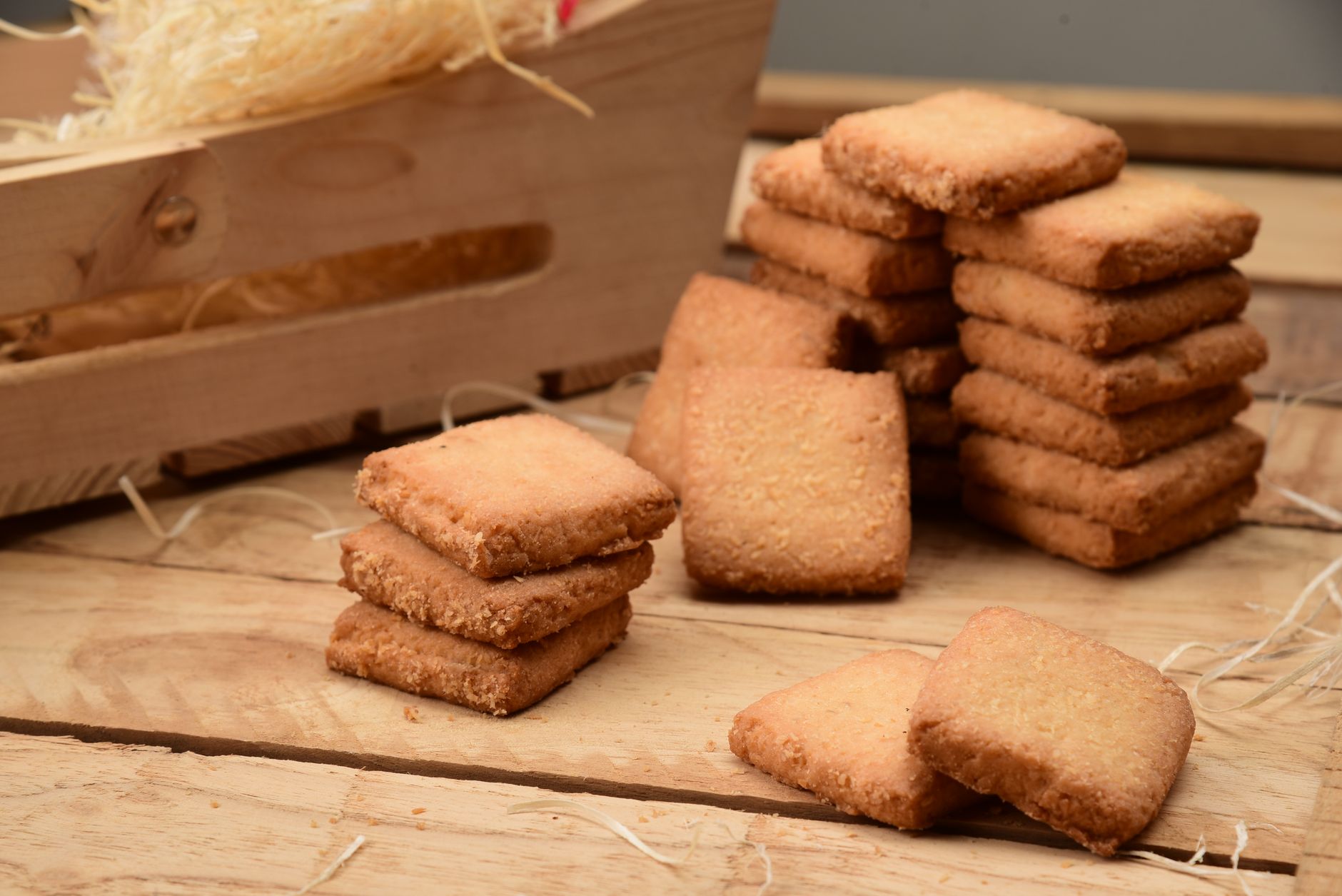 Photo by ALOK DAS
There's a reason shortbread keeps coming back around. It's simple, it's reliable, and it doesn't ask for anything weird. No eggs, no baking powder, no "rest overnight or else" drama. Just butter, sugar, flour, and you're in business.
What makes this one especially nice is that it sticks to the basics, and still tastes like a proper treat. It's all-butter shortbread, which matters. Butter gives you that rich flavor and that crumbly, crisp bite that people expect. Sure, you can swap fats, but when you want shortbread that tastes like shortbread, butter is the whole point.
It's also beginner-friendly in a very real way. You don't need a mixer, you don't need fancy tools, and you don't need to be "good at baking" to pull it off. A fork and a bowl get you through the first stage, and your hands finish the dough once the flour goes in. Even if the dough looks crumbly at first (it probably will), that's normal. You press it together, chill it briefly, and suddenly it behaves.
If you like comparing classic versions, it's worth seeing how other traditional recipes keep the same three-ingredient idea, like the classic shortbread approach from BBC Food. Different shapes, slightly different handling, same comforting end result.
Ingredients and cost breakdown (with grams and ounces)
This recipe keeps the list short and the math easy. Here's what goes in, including the costs as shared for the full batch.
| Ingredient | Amount | US conversion (approx) | Cost |
|---|---|---|---|
| Unsalted butter (softened) | 125 g | 4.4 oz | £0.97 |
| Sugar | 55 g | 1.9 oz | £0.07 |
| Plain flour | 180 g | 6.3 oz | £0.09 |
| Total | £1.13 |
A quick note on the butter: softened butter makes the first step almost effortless. If it's cold and hard, you'll fight it, and it won't blend smoothly with the sugar. Let it sit out a bit so it's soft enough to mash with a fork.
Also, the cost part is what turns this into a real budget recipe. Prices vary a lot by store and week, but the structure stays the same, and the ingredient list is the kind of stuff many kitchens already have.
If you're on a bit of a "bake something cheap but satisfying" streak, pairing this with another simple treat can be fun. This budget vanilla slice recipe is a totally different vibe, crisp pastry and custard, but it scratches that same itch of "how is this so affordable?"
Step-by-step: how to make homemade shortbread that stays crisp and buttery
Cream the butter and sugar (fork works fine)
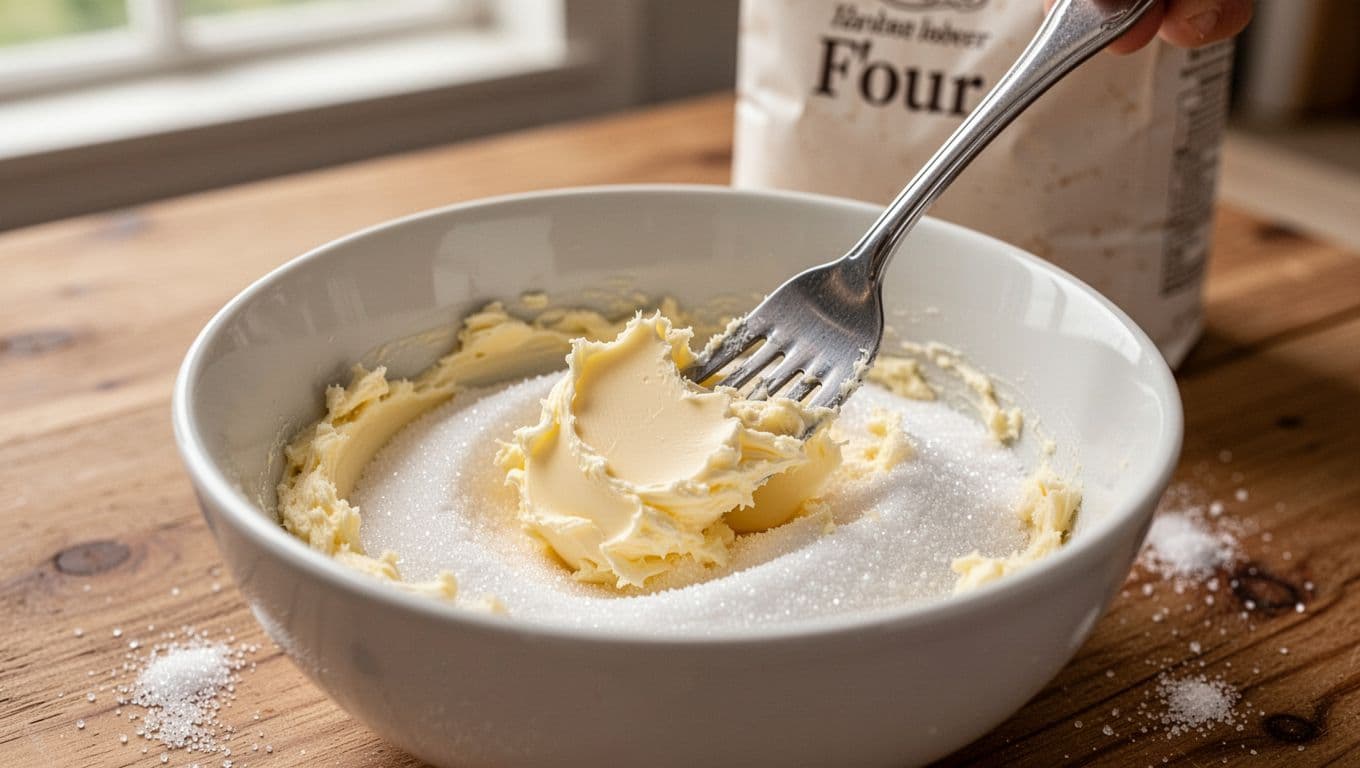 Softened butter getting mashed into sugar until it turns pale and creamy.
Start by putting the softened unsalted butter into a bowl, then add the sugar. Now just go at it with a fork. Press, mash, scrape, repeat. After a minute or two, it stops looking like butter sitting next to sugar and starts looking like one pale, creamy mixture.
That texture matters more than people think. If you take a moment here, the shortbread bakes more evenly, and the dough feels smoother later. An electric whisk works too, but it's honestly not required, and sometimes that's the nicest part. It feels old-school, in a good way.
Try not to overthink the look. You're not aiming for fluffy cake batter. You just want the butter and sugar properly combined, lighter in color, and kind of creamy.
Add the flour gradually, then press the dough together
Once the butter and sugar are combined, start adding flour a little at a time. Fold it in with a spoon at first, because it's less messy, and it helps avoid flour puffing everywhere. Keep folding, keep adding, and you'll see it go from creamy to sandy.
By the time the last flour goes in, the dough can look crumbly. That's not a fail. Shortbread dough often looks like it's not going to come together, until you bring it together.
At this point, use your hand to gently compress it. Don't knead it like bread. Just press and gather until it forms a dough. Then turn it out onto a board and compress it again. You're basically telling the dough, "Yes, we are becoming one piece now." It listens, eventually.
Now flatten it slightly and pop it in the fridge for around 20 minutes. That short chill makes rolling easier and keeps the dough from getting greasy.
Roll, cut, dock, then bake at 190°C (374°F)
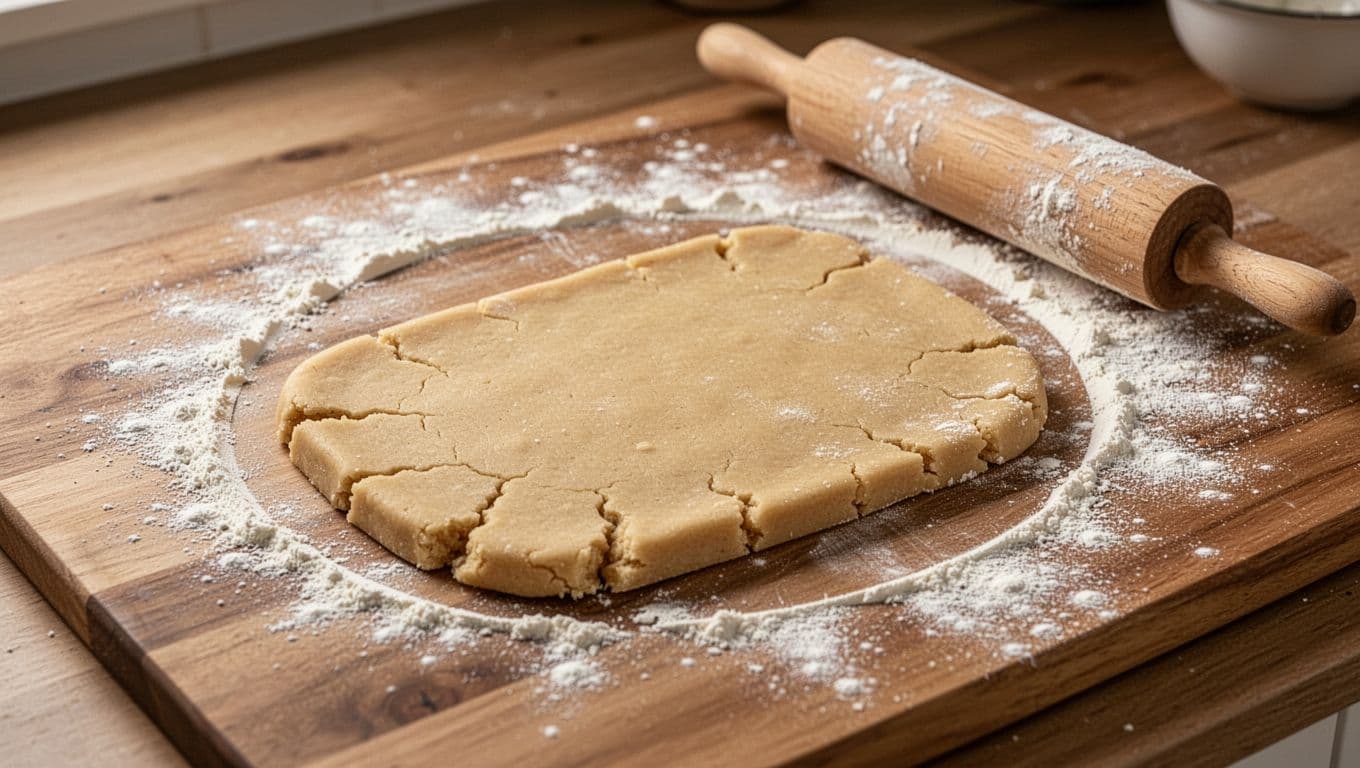 Shortbread dough rolled to about a half-inch thick on a lightly floured board .
After chilling, dust your board with a little flour, and add a light sprinkle on top of the dough too. Roll it carefully. If the edges crack, don't worry. Shortbread does that. Just keep rolling gently until you hit about ½ inch thickness.
Now choose your shapes. Rounds are easy and classic, but you've got options. You can cut fingers, petticoat tails, whatever feels right. When you're done with the first cuts, gather the scraps, press them together, and roll again. Shortbread is forgiving like that.
Before baking, pierce the tops with a fork (people call this docking). It helps the biscuits bake evenly and keeps the surface from puffing in odd spots. Then move them onto a baking sheet.
Bake in a hot oven at 190°C (374°F / Gas 5) for about 15 to 20 minutes. Keep an eye on them, because the line between "perfect" and "a bit too dark" can happen fast. You're looking for a light golden touch, especially at the corners and edges.
When they come out, they'll still feel slightly soft. Let them cool completely on a rack. Once fully cool, they turn crisp and properly short, the way shortbread should be.
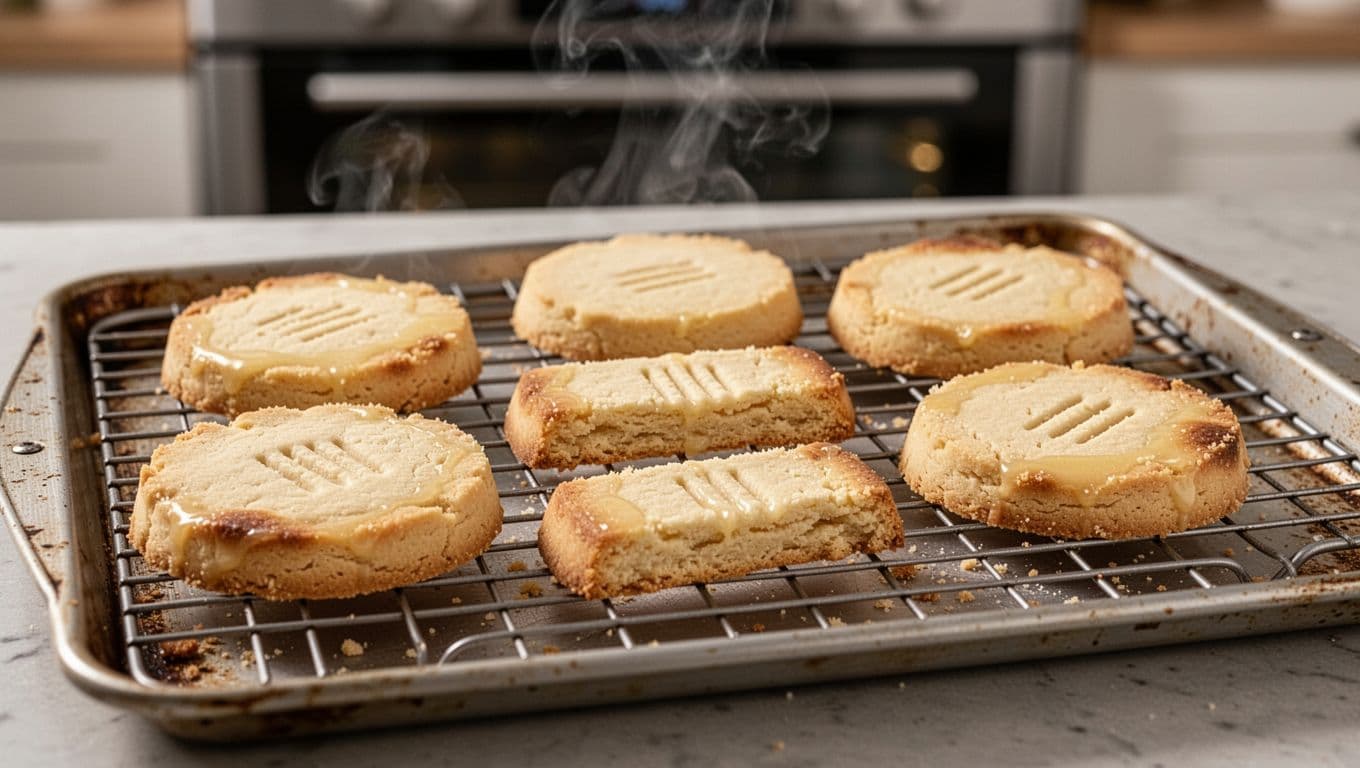 Freshly baked shortbread cooling until it firms up and turns crisp .
Let them cool all the way before judging the texture. Warm shortbread can feel soft, then it crisps as it sits.
How it tastes (and easy ways to turn it into "something fancy")
Once it's cooled, this shortbread hits all the right notes. It's crisp, it's buttery, and it has that tender crumble that almost disappears as you chew. It's the kind of cookie that doesn't need frosting or sprinkles, because the flavor is already there.
Coffee is an obvious pairing. Tea works too. Even a plain glass of milk does the job. The best part is how "clean" the taste feels, no extra stuff fighting for attention, just butter and sugar and flour doing what they do best.
Now, even though it's great on its own, this recipe also works like a base layer for other desserts. Same dough, different direction:
A dollop of cream and a handful of strawberries on top, and you're heading toward a shortcake-style treat. Add caramel, then chocolate, and you've got the bones of millionaire shortbread. You can cut it into rounds for a simple plate of biscuits, or bake it as thicker fingers if you like that bakery feel.
If you want another reference point for the same "3 ingredients, fast results" style, this three-ingredient shortbread guide from The Spruce Eats is a helpful comparison. The details vary, but the heart of it is the same: keep it simple, don't overwork it, bake until lightly golden.
And if you're building a small collection of low-cost bakes, it's fun to mix in something yeasted next, like these budget Belgian buns. Different skills, same payoff.
What I learned making this (the little stuff that actually matters)
The first time I tried a shortbread this simple, I expected the dough to look smooth right away. It didn't. It looked crumbly and a bit stubborn, and for a moment I had that "did I miss something?" feeling. But once I pressed it together on the board, it clicked. It's more like shaping damp sand into a castle than mixing cake batter.
Chilling for 20 minutes was another surprise win. I used to skip short chills because I'm impatient, then I'd wonder why the dough felt greasy and cracked more. This short rest made rolling calmer. The cracks still happened a bit, but they stopped feeling like a problem and started feeling normal.
Baking taught me to watch the corners, not the clock. Around 15 minutes, the edges start to color, and that's the signal. Also, letting them cool fully is not optional. I tried one too soon, because of course I did, and it was softer than I wanted. Ten minutes later, it was crisp and perfect. So yeah, waiting pays off, even if it's annoying.
Final thoughts
This is the kind of bake that earns a permanent spot in your back pocket. Three ingredients, simple method, and a full plate of crisp, buttery biscuits for £1.13 is hard to beat. If you've been hunting for a budget recipe that still feels like a real treat, this one delivers. Make it once, then try it again with different shapes, and see what becomes your "default" batch.


0 Comments