
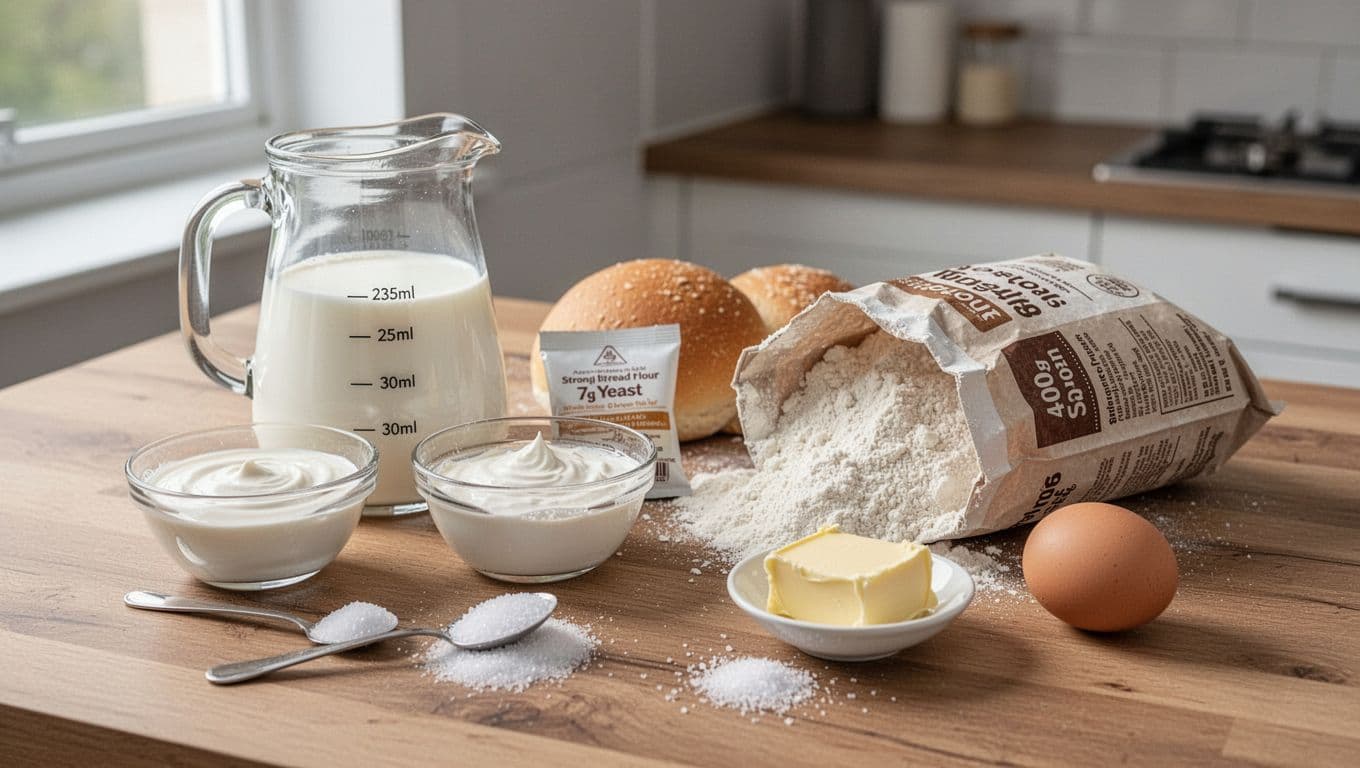
 Everything you need for rich burger buns laid out and ready.
Store-bought burger buns can be weirdly expensive for what they are, and half the time they're either too dry or too flimsy. These homemade burger buns fix that. The dough is rich (milk, cream, egg, butter), the buns bake up large, and the crumb stays tight enough to handle burger juices without turning into a soggy mess.
Best part, it's a proper budget recipe. The ingredient list below works out to £1.06 total for 6 buns, which is about 17p each.
Ingredients and cost breakdown (6 large buns)
This recipe is all about a rich dough, meaning there's fat and dairy in the mix to keep the buns soft and flavorful. You're not chasing "artisan crust" here. You want a bun that's tender, a little sweet, and strong enough to hold an actual burger.
Here's the full list with the costs as given:
- 235 ml milk (14p)
- 30 ml cream (13p)
- 1 tsp sugar (2p)
- 1 packet yeast (7 g) (8p)
- 400 g strong bread flour (44p)
- Pinch of salt (pantry staple)
- 1 tbsp butter (11p)
- 1 egg (14p)
To make the numbers easy to scan, here's the same info in a table:
| Ingredient | Amount | Cost |
|---|---|---|
| Milk | 235 ml | £0.14 |
| Cream | 30 ml | £0.13 |
| Sugar | 1 tsp | £0.02 |
| Yeast | 1 packet (7 g) | £0.08 |
| Strong bread flour | 400 g | £0.44 |
| Salt | pinch | £0.00 |
| Butter | 1 tbsp | £0.11 |
| Egg | 1 | £0.14 |
| Total | 6 buns | £1.06 |
So you're looking at 6 substantial, hand-sized buns for about 17p each. Prices vary by store and week, of course, but the structure stays the same: basic ingredients, big payoff.
If you're on a bun-baking kick, this budget Belgian buns recipe is a fun next project too, it's the same "cheap ingredients, bakery vibes" idea, just sweeter.
Bloom the yeast so you know it's alive
The first move is simple: warm the milk and cream, then use that warmth to wake up the yeast. You're aiming for lukewarm, not hot. If it feels like baby-bottle warm, you're in the right zone.
Put the milk and cream into a small pan and warm it over very low heat. Don't rush this part. A scorched dairy smell hangs around, and it's not the vibe.
While that warms up:
- Add the sugar to a jug (or small bowl).
- Tip in the yeast (one 7 g packet).
- Pour over the warm milk and cream.
- Stir, then cover and leave it for 10 minutes.
You're watching for froth. A bit of foam on top is the "yes, we're good" sign.
If the surface stays flat after 10 minutes, the yeast might be old, or the liquid was too hot. It's annoying, but restarting here beats wasting flour later.
This "bloom first" habit is especially handy when you're baking on a budget. You don't want to guess and hope. You want proof (literally) before you commit the rest of the ingredients.
If you like comparing methods, this homemade hamburger buns recipe shows another classic approach with similar pantry basics.
Mix the dough, then knead for 10 full minutes
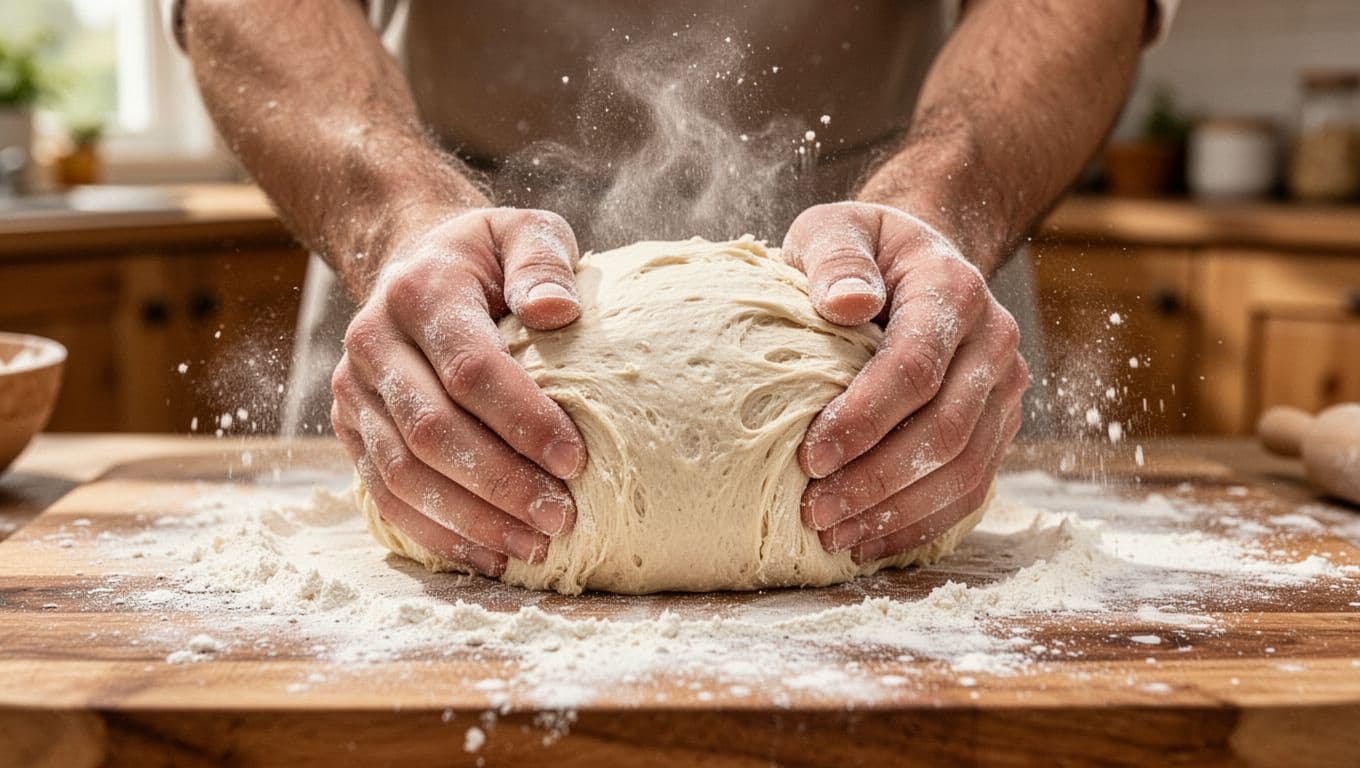 Hands-on kneading to build a smooth, springy dough, created with AI.
Grab a mixing bowl and add the strong bread flour and a pinch of salt. Then take your softened butter and pinch off little bits, dropping them into the flour. This makes it easier to work in, instead of fighting one greasy lump.
Next, crack the egg into a cup and whisk it quickly. Nothing fancy, just break it up. Pour the egg into the flour bowl.
By now your yeast mix should look a little frothy. Tip that into the bowl too.
At this stage, don't panic. This dough starts out wet and sticky. That's normal. The stickiness is part of what keeps the buns soft later, so try not to "fix" it by dumping in lots of extra flour.
Start by mixing with a spoon until it clumps, then switch to your hands. Flour your hands and your work surface well, because yes, it'll cling at first.
Now knead. Proper knead. Set a timer and go for 10 minutes.
You'll feel the change. At first it's shaggy and messy. Then it starts to smooth out. By the end, it should be less sticky, nice and elastic, and it should spring back when you press it.
Add flour only when you must. Too much extra flour can make the buns heavy, and you'll lose that soft bite you're chasing.
If you've ever baked homemade fluffy iced finger buns, the dough behavior is kind of similar: sticky at the start, then it settles down once kneading does its job.
First rise, then shape into 6 buns
Once the dough feels smooth and springy, drizzle a little oil into a clean bowl. Drop the dough in and turn it so the surface gets a light coating. Cover with a tea towel.
Now it needs warmth. If your kitchen is chilly, a handy trick is to place the bowl in the oven with just the light on. No heat, just the light. Leave it for 1 hour.
After an hour, the dough should look about doubled in size.
Tip it out onto the counter and press it down to knock out the gas. You don't need to punch it like you're mad at it. Just push the air out so you can shape it cleanly.
Shape the dough into a rough cylinder, then cut it into 6 pieces. "Equal" is the goal, but don't stress. If one bun ends up slightly bigger, someone will happily take that one.
To shape each bun:
- Fold the piece in on itself to make a little parcel.
- Flip it so the seam is underneath.
- Roll it on the counter into a round.
Place the rounds on a greased baking tray, leaving space between them. They're going to expand, and they don't want to merge into one mega-bun unless that's your plan.
At this point you can already tell these are going to be substantial. They're not the tiny, sad supermarket slider buns. These are the "fills your hand" kind.
Second rise and a simple milk wash for soft tops
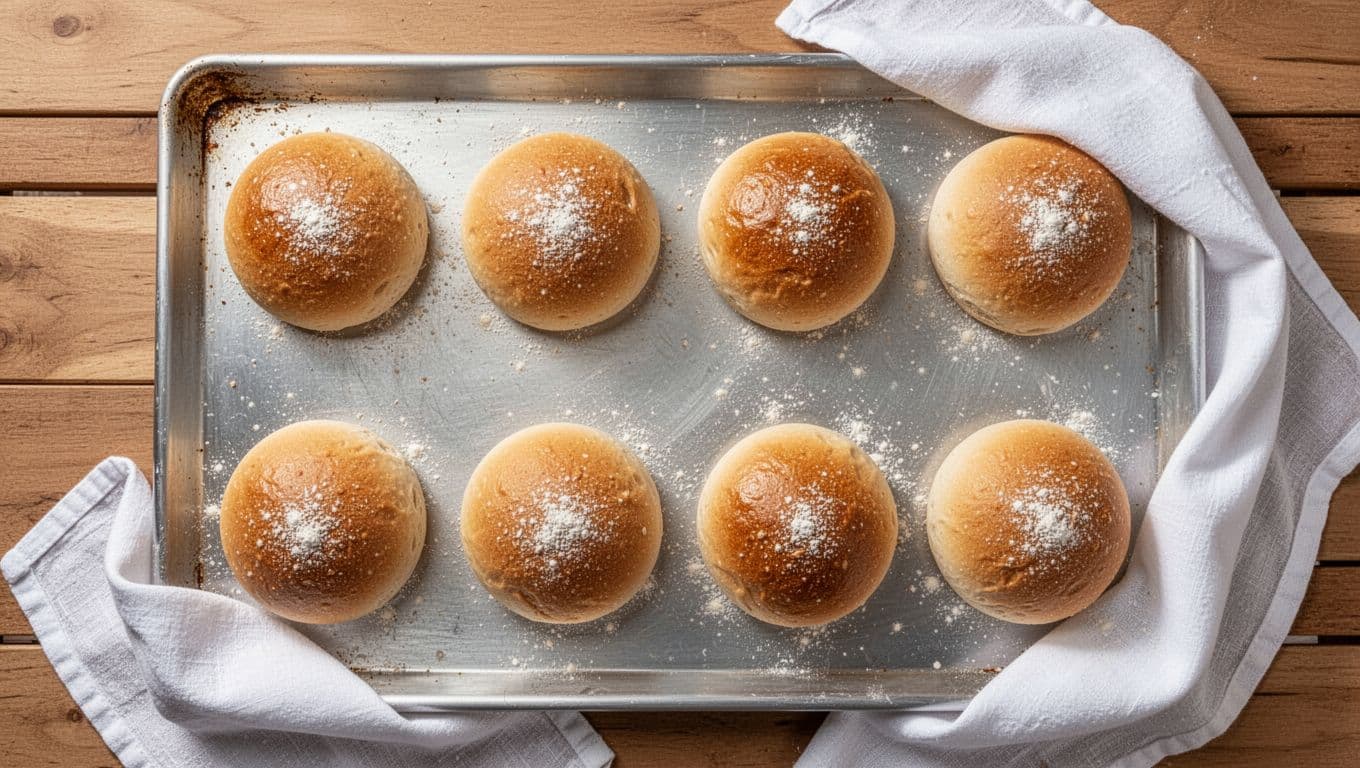 Buns proofing on the tray with room to rise, created with AI.
Cover the tray with a tea towel and leave the buns to rise again for another hour. Before you drape the towel, dust the tops very lightly with flour so the towel doesn't stick. It's a small thing, but it saves that annoying moment where fabric peels dough skin off the top.
After the second rise, the buns should look puffy and ready. Brush off any excess flour.
Now for the finish. Instead of an egg wash, brush on a light coating of milk. The goal here is a gentle browning without making the top too crisp. For burger buns, that softer top is a win, because it bites clean and still holds up to sauces.
Some recipes do use egg wash for deeper shine. If you want to see another faster bun approach, Taste of Home's 40-minute hamburger buns is an interesting contrast. Still, milk-washed buns have their own charm, a little more tender, a little less crackle.
Bake at 200°C, then cool before slicing
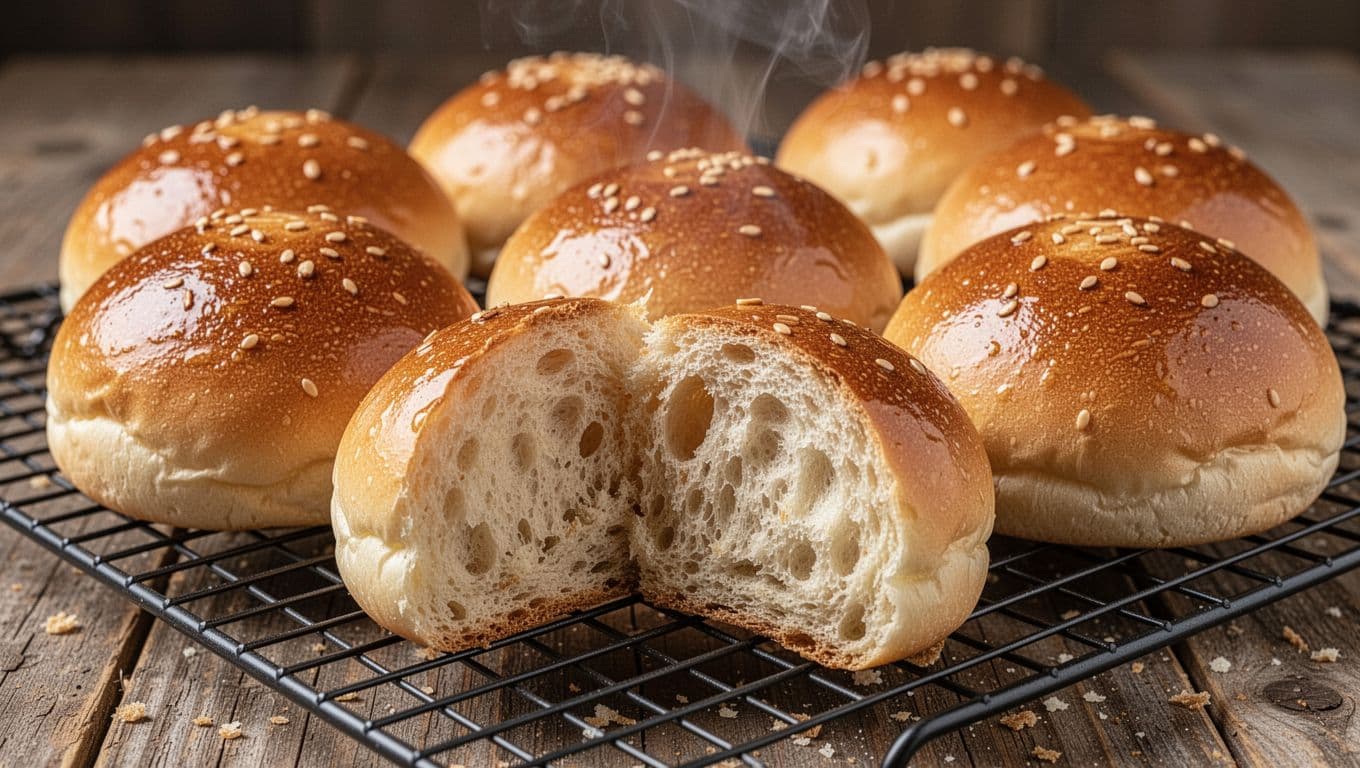 Fresh burger buns cooling, with one split to show the tight crumb, created with AI.
Heat the oven to 200°C (392°F / Gas Mark 6). Bake the buns for about 15 minutes, but start checking around the 12-minute mark. Ovens vary, and enriched dough can brown fast near the end.
You're looking for a nice golden color. Another good check is the sound: carefully lift one and tap the bottom. It should sound hollow, like a light knock on a wooden door.
When they come out, they'll be extremely hot. Let them cool before cutting, even if your kitchen smells like a bakery and your willpower is low. If you slice too early, steam can make the inside a bit gummy.
Once they've cooled slightly, slice one open and look at the crumb. The target is a tight, springy texture, not big holey bread. That tighter crumb is what helps the bun soak up burger juices without falling apart.
Spread a little butter on a warm piece and it melts right in. Soft, rich, slightly sweet. It's one of those simple pleasures that makes you pause mid-bite.
Serving ideas, storage, and why the two rises matter
These buns are made to work hard. Pile in a thick burger patty, add onions, sauce, whatever you like, and they hold their shape. The crumb has that "bounce," so it doesn't instantly compress into a flat layer.
A few practical notes that make this batch easier to live with:
Serving: Slice and toast lightly if you want extra grip for sauces. If you prefer soft all the way through, keep them un-toasted and let the crumb do its job.
Cooling: Give them time. Even 20 minutes helps the inside set, and you'll get a cleaner slice.
Storing: Keep them in a sealed bag or container once fully cool. They're best fresh, but they still make a solid burger the next day.
The two rises are the quiet hero here. The first rise builds structure and flavor. The second rise gives you that lift and tenderness, so the bun feels light but still "together." It does take a little time, sure, but most of it is waiting around while you do other stuff.
And if you're already in a baking mood, the next natural step is to make burgers to match, plus a spicy tomato relish. That combo with a fresh bun is honestly hard to beat.
What I learned making these (and what I'd do next time)
The first time I tried a bun dough like this, I made the classic mistake: I kept adding flour because it felt sticky. It looked "cleaner," but the baked buns came out a bit dense. Not terrible, but not that soft, tearable bun you want.
With this method, I finally got why sticky dough isn't the enemy. Once I stuck with the full 10-minute knead (and yeah, it feels long), the dough changed in my hands. It went from clingy to smooth, and it started springing back like it had a bit of confidence.
I also liked the milk wash more than I expected. Egg wash looks pretty, but the milk finish felt more burger-friendly. Softer top, easier bite, and it didn't fight the filling.
Next time, I'd space the buns even more on the tray, because they really do expand. I'd also weigh the six pieces just to satisfy my own brain, even though "close enough" works fine.
Conclusion
If you want a budget recipe that feels like a real upgrade, these homemade burger buns are it. The ingredient list is short, the method is straightforward, and the results are big, soft buns with a tight crumb that actually holds up to burgers. Give yourself the two rises, don't over-flour the dough, and pull them from the oven when they're golden and hollow-sounding. When you tear into one while it's still a little warm, it's hard not to feel smug in the best way.


0 Comments